A look back at Team Canada’s Olympic history, the SAIT Edition
Find out how SAIT staff and alumni have been involved in the Olympics — even bringing medals home! — since the 1988 Winter Olympics in Calgary all the way to Milano Cortina 2026.
The legacy of the 1988 Winter Olympics is everywhere you look in Calgary. Whether you’re headed for the mountains passing the iconic ski jumps in Winsport, passing the construction that currently surrounds Olympic Plaza or are in Eau Claire where our Olympic arch is situated, the city keeps our Olympic memories alive.
We’re no exception here at SAIT.
SAIT staff and alumni have been involved in the Olympics — some behind the scenes, some capturing the action and some bringing medals home — for decades.
Look back at some notable achievements since the 1988 Winter Olympics in Calgary, leading all the way up to Milano Cortina 2026.
1988: A total Olympic takeover of SAIT’s Main Campus
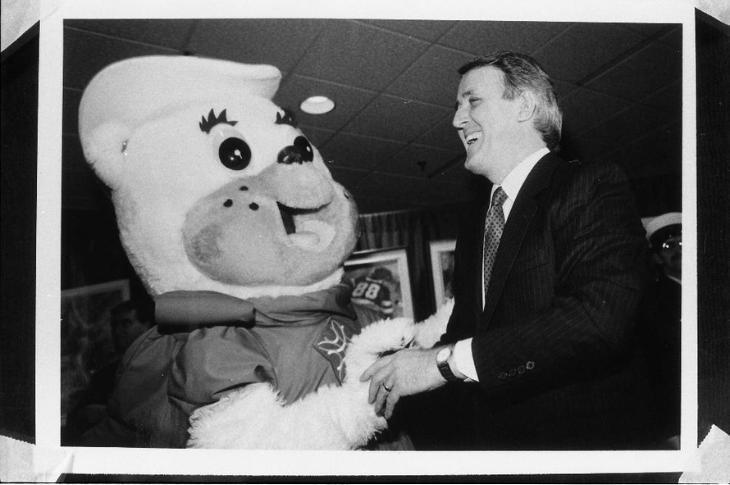
The very halls our students walk in today were once swarming with Olympians. On the eve of the 1988 Winter Olympics, the CTV Gala Dinner was catered by and hosted at SAIT. Notable guests included 1988 Olympic Winter Games mascots Hidy and Howdy, as well as Canadian Prime Minister Brian Mulroney, Mila Mulroney and Governor-General Jeanne Sauvé.
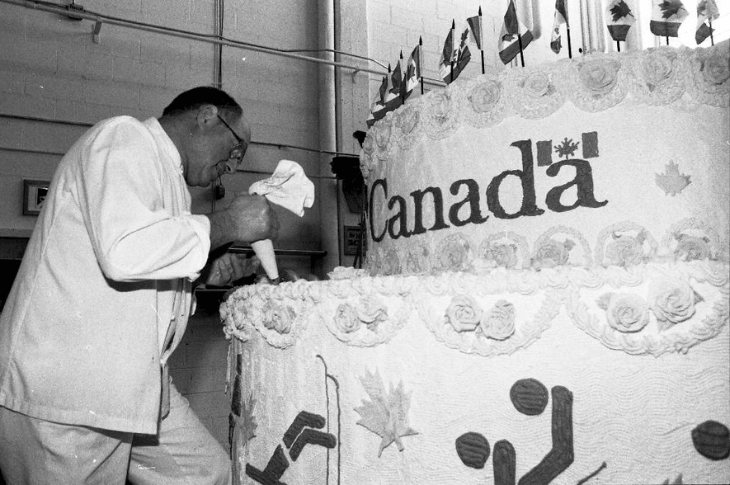
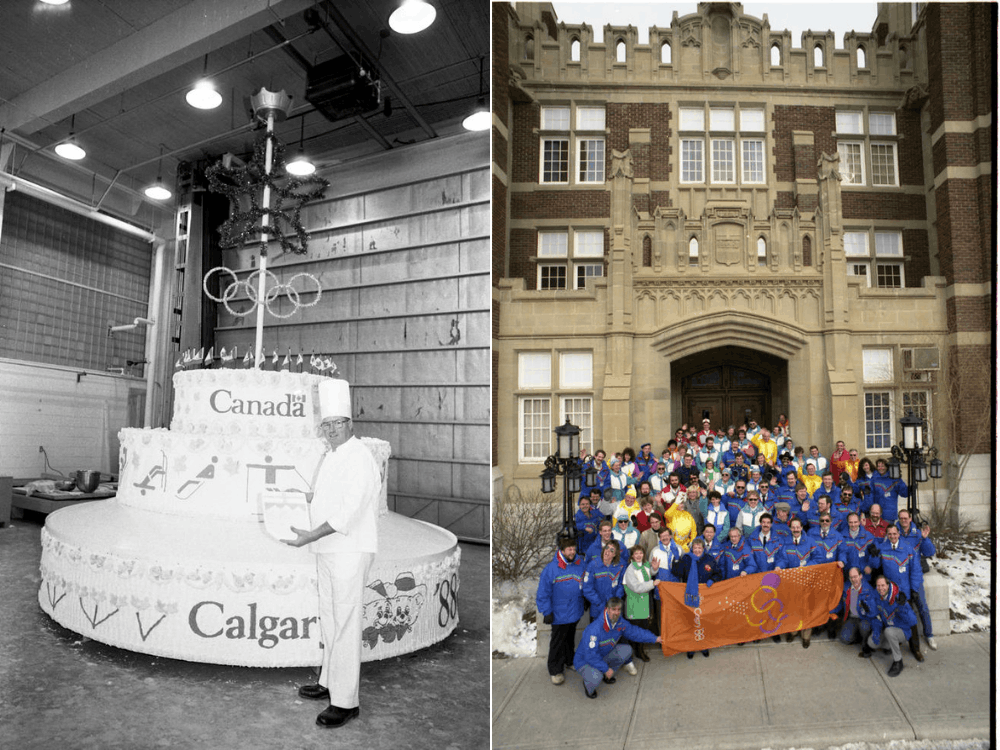
Our culinary faculty and staff were involved in supplying a massive (and we mean massive!) decorative cake to commemorate the occasion.
To host the hundreds of athletes and coaches Calgary-bound for the 1988 Winter Olympics, SAIT supplied rooms in its old residence building, Owasina Hall.
1992: A Petroleum Technology alumnus begins a lifelong commitment to the Paralympics in Barcelona
Patrick Jarvis, Petroleum Engineering Technology, ’81, not only competed at the 1992 Paralympic Games in Para athletics but has also spent nearly four decades immersed in Para sport — as an athlete, advocate, board member and donor. Some of Jarvis’s impressive credentials include serving as president of the Canadian Paralympic Committee and being a board member on the International Paralympic Committee.
2010: Helping Canadians “own the podium”
Before he was the Vice President of Corporate Development and Applied Research, Alex Zahavich had Olympic dreams. A longtime sports enthusiast and track-and-field athlete himself, his goal was to make it to the Olympics.
In a real plot twist, it was his engineering and research expertise that brought him there.
In 2005, Own the Podium was formed, and Zahavich named as one of the researchers who would help Canadian athletes achieve excellence in the Summer and Winter Olympics and Paralympic Games.
In advance of the 2010 Winter Olympics, experts from SAIT’s Applied Research and Innovation Services (ARIS) Hub were brought in as consultants to find new ways to keep speed skaters’ blades sharp, to help curling athletes better align their aim and to maximize the participation and speed of bobsleigh, luge and skeleton athletes.
“One of the barriers for skeleton athletes had been access to equipment, so we were building ‘School Sleds’ to increase the volume of athletic participation. At the same time, we were also building an ‘elite sled.’
“At the time, the skeleton sled that was being used everywhere was heavy, unresponsive and difficult to steer. It was effective, but we saw an opportunity to design something more responsive. The less body movement you have, the more aerodynamic you are, the faster you go. That was our design philosophy. We designed something you could steer with your head, using the basic physics concept of action-and-reaction.”
2010: Shaping the future of sliding sports safety
After the 2010 Winter Olympics, SAIT won a contract for the Whistler Sports Legacy to support the coroner’s inquest into Nodar Kumaritashvili’s tragic death on the luge track during the Vancouver Olympics.
Zahavich recalls: “We were contracted as a neutral body to conduct a safety audit and design analysis. Using new 3D scanning and simulation technology, along with interviews, we studied the Whistler Sliding Track and its safety protocols. We assembled a team of science and engineering experts from Canada and around the world to contribute to the study, and we put forward 29 recommendations which have been adopted globally to create a safer sport. In advance of the 2014 Olympics, a section of the sliding track at Sochi was actually redesigned as a result of our recommendations to make things safer for the athletes. That is one of SAIT’s most profound legacies.”
2010: A respiratory therapist alumna brings home curling silver
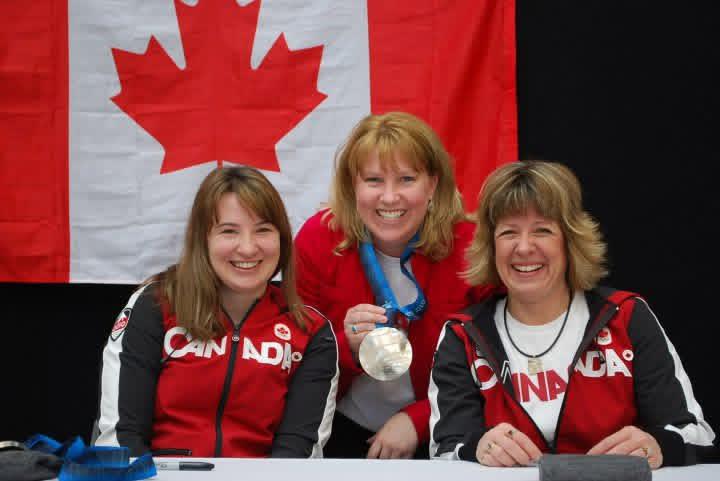
Susan O’Connor, Respiratory Therapy, ’99, brought home silver after a close match in the women’s curling final against Sweden in the 2010 Winter Olympics in Vancouver.
2012: A civil engineering alumna goes to London to show off her diverse skills
Pentathlete Melanie McCann, Civil Engineering Technology, ’10 and Bachelor of Business Administration, ’19, made her Olympic debut in the 2012 Summer Olympics, held in London — showcasing her skill in fencing, swimming, riding and laser run. She finished 11th, the best-ever Olympic result by a Canadian modern pentathlete. She went on to show off her prowess four years later, in the Summer 2016 Olympics in Rio de Janeiro.
2012: An Architectural Technology alumnus brings home silver in wheelchair rugby
Zak Madell was just 16 when he first tried wheelchair rugby. Within a year, he was a Paralympic silver medalist at the 2012 Summer Paralympics, held in London. Since, Madell has competed in multiple Paralympic Games, travelling the world with our great team.
2020: A Hospitality and Tourism Management alumnus goes with his gut in Tokyo
Trevor Hofbauer, Hospitality Management, ’13, was one of the first athletes named to Team Canada’s roster for the 2020 Summer Olympics in Tokyo. A remarkable factoid about Hofbauer: he ran the race without a watch, going on feel to determine his pace.
2024: A Mechanical Engineering Technology alumnus takes a shot at Olympic glory
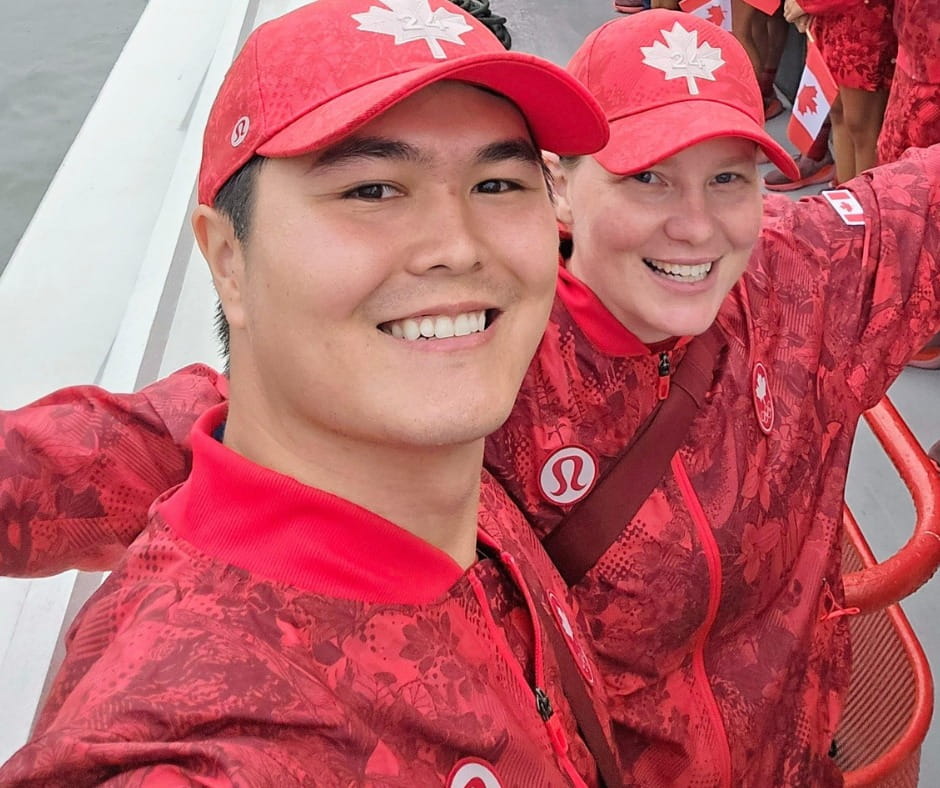
Tye Ikeda, Mechanical Engineering Technology, ’18, took up Shooting as a sport in 2018 — and, in 2024, he made his debut in the 2024 Summer Olympics in Paris, representing Canada in the Men’s 10m Air Rifle and Men’s 50m Rifle 3 Positions events.
2024: SAIT gets behind the scenes
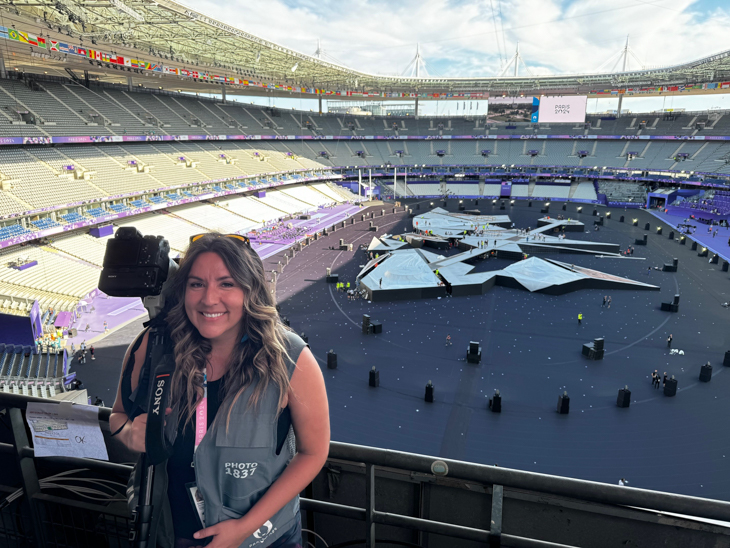
Candice Ward, Journalism, ’08, and former SAIT instructor, will go anywhere she needs to get “the shot” — including wherever in the world the Olympics are. In 2024, that meant Paris and, in 2026, she took her equipment to Milano Cortina.
2026: An Electrical Engineering Technology alumna hits the slopes
Sonjaa Schmidt, Electrical Engineering Technology, ’25, hit the snow and the world stage in the 2026 Winter Olympics, making her cross-country ski debut.
View this post on Instagram
2026: A Journalism alumni reunion in Milan
It’s a reunion! With so much action going on, the Olympics are a sports photographer’s paradise. Ward is in Italy for the 2026 Winter Olympics. So is Leah Hennel, Journalism, ’98, and Honorary Bachelor of Business Administration degree recipient, and Nathan Denette, Journalism, ’03.
Meanwhile, live spectators will hear the voice of Kyle Bukauskas, Radio, Television and Broadcast News, ’13, through the Olympic loudspeakers. This 2022 Outstanding Young Alumni is reporting from the rink side.
2026: He’s an alumnus, Olympic gold medalist and now an honorary degree recipient…
SAIT’s Winter 2026 Convocation honorary degree recipient is Brady Leman, Business Administration, ’23.
Proudly representing Canada for more than 15 years on the Canadian Ski Team, Leman’s athletic achievements include 33 World Cup podium finishes, gold and bronze medals at the X Games, a silver medal from the 2019 World Championships and an Olympic gold medal in 2018. Since retiring from competition in 2023, Brady remains involved in the sport through financial mentorship for athletes, coaching, fundraising and sitting on the board of directors for the Alberta Alpine Ski Association.

Oki, Âba wathtech, Danit'ada, Tawnshi, Hello.
SAIT is located on the traditional territories of the Niitsitapi (Blackfoot) and the people of Treaty 7 which includes the Siksika, the Piikani, the Kainai, the Tsuut’ina and the Îyârhe Nakoda of Bearspaw, Chiniki and Goodstoney.
We are situated in an area the Blackfoot tribes traditionally called Moh’kinsstis, where the Bow River meets the Elbow River. We now call it the city of Calgary, which is also home to the Métis Nation of Alberta.