Overview
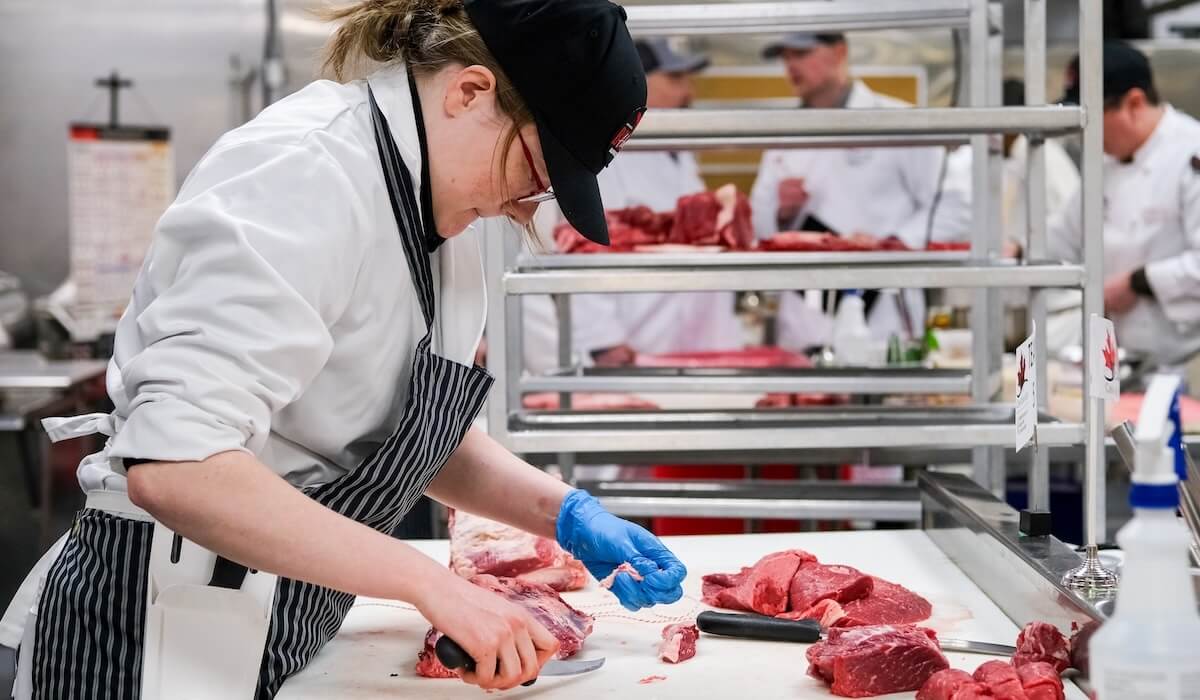
Get the hands-on skills and training you need for a rewarding career in the food industry with our two-year Butcher Chef and Charcuterie Management diploma program.
You'll gain a greater depth of knowledge and a higher-level skillset while covering enhanced theoretical techniques suited for a variety of positions in the changing food market.
In this unique, meat-centric program, you'll have the opportunity to train and learn from leading professionals in the meat industry, including Master Meat Crafters and chefs with years of lived experience. You'll be trained in all aspects of the meat and charcuterie trade.
If you're interested in pursuing career options in butcher shops, meat retail outlets, restaurants, hotels and meat-centric food outlets, this program will help you gain valuable real-world experience to prepare you for success after graduation.
Those who thrive in this field are precise, hands-on, and creatively driven. They value tradition, craftsmanship, and innovation equally.
To succeed in this field, you'll need:
- a passion for whole-animal butchery and artisan meat preparation
- attention to detail and respect for technique and tradition
- good physical stamina and overall health
- a sharp sense of taste and smell
- excellent knife skills and hand-eye coordination
- strong math skills for weights, yields, and costing
- a solid memory for cuts, curing times, and recipes
- strong interpersonal, communication, and team collaboration skills
- the ability to stay focused and composed in fast-paced environments
- the ability to lift heavy products and stand for extended periods
- flexibility to work evenings, weekends, or irregular hours
- good organizational habits and time management skills
- a strong commitment to cleanliness, hygiene, and food safety standards.
You should enjoy working with your hands, transforming raw ingredients into refined products, and taking pride in sustainable, respectful meat practices. This field also suits those who take satisfaction in planning production, refining techniques, and collaborating in team settings.
During your second to fourth semesters, you'll participate in a professional paid internship for a minimum of 320 hours.
You'll gain hands-on experience in a real-world environment while developing valuable industry connections and networking with potential employers. You are responsible for sourcing your own internship placement; however, administrative support is available to assist with the process.
You can also broaden your horizons by joining one of our exciting international study tours. Previous destinations have included Australia, France, Spain, Italy, Chile, and Thailand. Study tours are optional and include additional costs.
Finally, you'll complete a year-end capstone project to showcase and demonstrate the full range of your skills.
Internship course fees are approximately $553 for domestic students. This is included in the overall tuition listed in the fee table.
After successfully completing this program, you'll receive a SAIT Butcher Chef and Charcuterie diploma.
Careers and opportunities
Associated National Occupational Classification (NOC) codes: 10012, 60020, 60030, 62020, 63200, 63201, 65202, 94141, 94142, 95106.
Career planning support
Unsure which career path is for you? Here are some recommended career planning resources to help you decide your future.
You can also head to Alberta alis for lots of information about careers in Alberta, including quizzes and labour market information to help you narrow down a path.
Finally, you can take our online career finder quiz, which can help narrow your options based on your current skills and interests.
Courses
The Butcher Chef and Charcuterie diploma requires 73.5 credits (25 courses) to complete.
The program spans two years, with two semesters each year.
You must take all of the following courses to complete this program.
| Course | Credits |
|---|---|
|
Leadership and organizational culture in culinary management. This course introduces the tools, concepts and theory that you need to work proficiently in the culinary and baking industry. Students will develop communication, interpersonal and leadership skills essential to culinary and hospitality management, with a focus on communication strategies, while exploring emotional intelligence, team dynamics, and conflict resolution. Topics include teamwork, conflict management, organizational culture, wellness in the hospitality industry, and employee engagement. Emphasis is placed on professional communication, wellness, and engagement strategies that support effective relationships in hospitality workplaces. |
3 |
|
Foundations in Financial Management This course introduces key financial and operational principles in culinary management, including cost control, menu planning, and digital communication. Topics include recipe costing, portioning, and yield calculations, along with menu pricing, engineering, and inclusive design. Learners also explore branding and digital media strategies in the culinary field, to support operational success and professional growth. Emphasis is placed on practical costing, menu design strategies, and the use of digital tools to support both operational success and professional growth in culinary management. |
3 |
|
Guest Experience This course explores the principles of service excellence and guest experience across culinary disciplines. Students analyze guest expectations, service standards, and strategies for creating memorable dining and product experiences. Emphasis is placed on communication, sensory appeal, and professionalism in guest interactions. Pre-requisites:
One of:
|
3 |
|
Global food, culture and sustainability This course examines the cultural, social, and operational dimensions of food in a global context. Students explore how food shapes identity, builds community, and serves as a tool for diplomacy and connection across cultures. Emphasis is placed on sustainability in food service, as learners assess challenges and propose sustainable menu alternatives. The course also considers evolving food preferences and technological innovations that influence production and consumption, preparing learners to integrate cultural awareness, ethical practices, and forward-thinking strategies into modern culinary operations. Pre-requisites:
One of:
|
3 |
|
Entrepreneurial foundations in culinary management This course introduces the principles of entrepreneurship and business management within the culinary industry. Students explore the entrepreneurial mindset, compare business models, and develop strategies for professional networking and leadership. Emphasis is placed on building innovative, inclusive teams and understanding consumer behavior, marketing, and engagement. Learners also apply financial management concepts-including cost analysis, budgeting, and profit evaluation-to real-world culinary operations. Through practical projects and presentations, students strengthen communication and business skills essential to launching and managing successful food service ventures. Pre-requisites:
One of:
|
3 |
|
Students are introduced to fundamental knowledge in butchery, focusing on safety and food sanitation, demonstration of hands-on butchery skills, familiarization with lab equipment and safe food handling procedures. |
3 |
|
Students are introduced to meat cutting, specifically designed to equip students with essential skills for a successful career in the meat industry. Throughout the course, students engage in various activities that promote a foundational understanding of meat processing techniques. By participating in practical exercises, students gain valuable experience that prepares them for real-world applications in the field. |
3 |
|
Expanding foundational skills, this course will further immerse students in the practical applications of butchery within real-life environments present in our school. Students have the opportunity to explore and understand the nuances of custom cutting techniques tailored specifically for the retail market. |
3 |
|
Students explore the systematic breakdown of beef, pork, lamb, and poultry, emphasizing precision cutting techniques and industry-standard portioning. Students master the art of merchandising meat products, including proper packaging, labeling, and display methods that maximize product appeal and shelf life. Special attention will be given to food safety regulations, HACCP principles, and sanitation procedures essential for maintaining a safe working environment. |
3 |
|
Students are introduced to the foundational cooking skills essential for success in applied butchery. Students develop knife handling techniques, learn stock production, and explore various cooking methods using industry-relevant equipment and value-added applications. The course also provides an introduction to meat science, covering topics such as muscle composition and function, the impact of slaughter on meat quality, meat nutrition, final quality assessment procedures, and relevant government regulations affecting meat production for retail. |
3 |
|
Introduction to Charcuterie explores the specialized field of meat preservation, including techniques such as curing, smoking, and aging. Students gain foundational knowledge of charcuterie processes and develop an understanding of the importance of selecting appropriate cuts to achieve optimal product quality. Emphasis is placed on both technical skills and product knowledge to ensure customer satisfaction. |
3 |
|
Butcher Shop: Operations 1 focuses on preparing students to operate a retail butcher shop and wholesale meat processor. In addition to meat-cutting techniques, students explore key business components of butcher shop operations, including inventory management, merchandising, and customer service. The course emphasizes practical skills required for successful day-to-day shop activities. |
3 |
|
Students focus on the technical skills required to prepare meat products for retail and wholesale. Students learn techniques for cutting, portioning, packaging, labelling, and displaying various meat products in a retail setting. Emphasis is placed on quality control, yield optimization, product presentation, and compliance with food safety and labelling regulations. Students also gain experience in managing production schedules to meet customer demand and minimize waste. |
3 |
|
This advanced course further develops the skills required to manage and operate a retail and wholesale butcher shop successfully. Students continue to develop the technical skills necessary to work in retail and wholesale butcher shop environments. Students focus on product preparation, portioning, packaging, labelling, and display techniques used in commercial meat operations. The course also introduces pricing strategies and regulatory compliance in a professional meat retail setting. |
3 |
|
This capstone provides an opportunity for students to demonstrate practical skills and key theoretical learning from the first year of the program, including content from Meat Cutting, Operations, Culinary Management 1 and 2. Students will be individually assessed through a practical capstone project, as well as through written and oral assessments. |
3 |
|
Students are introduced to the value-added protein sector as a means to enhance profitability and expand market share. The course explores the protein-based home meal replacement sector, emphasizing strategies to maximize product utilization. Students apply precise ingredient measurements, specific processing times, and detailed documentation practices, including batch numbers, processing dates, and quality control checks. |
3 |
|
Through this course, students gain practical knowledge of meat science, muscle structure, and quality assessment while learning to maximize product utilization and minimize waste in a professional kitchen environment. Additionally, students explore various cooking methods appropriate for different cuts of meat, understand proper storage procedures, and develop proficiency in knife skills essential for butchery operations. |
3 |
|
This course delves deep into advanced specialized meat fabrication techniques, sustainable butchery practices, and advanced culinary applications. |
3 |
|
The curriculum includes hands-on experience with different production methods, from basic fresh sausage making to complex dry-cured products. Students will be exposed to semi automated equipment used in meat production facilities. |
3 |
|
Students are introduced to the rich culinary traditions of charcuterie from various cultures. The course explores a diverse range of products, including cured and processed meats such as salami, pâtés, terrines, and regional sausages, each reflecting the unique cultural heritage and local resources of its origin. |
3 |
|
Advancing the art of charcuterie, this course integrates both theoretical knowledge and practical skills. Students learn advanced techniques in meat selection, butchery, seasoning formulation, curing, and aging. Emphasis is placed on fermentation, emulsification, and thermal processing, with a strong focus on food safety through the application of FSEP and HACCP guidelines. |
3 |
|
This comprehensive course explores methods in protein modification and enhancement for improved quality and sustainability. Students delve into various techniques used in the food industry to add value to protein ingredients through physical modifications. The course covers fundamental concepts of protein structure-function relationships and how these properties can be manipulated to enhance nutritional value, functionality, and operational benefits. |
3 |
|
This advanced course explores specialized butchery methods and culinary techniques used to modify and enhance protein for improved quality, functionality, and sustainability. Students examine physical modification processes commonly applied in the food industry and investigate how protein structure-function relationships can be manipulated to create value-added products. Emphasis is placed on integrating technical precision with culinary innovation to optimize nutritional and operational outcomes. |
3 |
|
This capstone course provides students with an opportunity to demonstrate advanced proficiency in butchery through practical and theoretical assessment. Students are evaluated on their technical skills, applied knowledge, and ability to analyze cut, cured, and cooked products. The course emphasizes precision, critical thinking, and integration of learning from across the program. |
3 |
|
This course provides a bridge between academic studies and practical, experiential learning. The choice of worksite is flexible and can include hotels, restaurants catering operations and other approved food service establishments. Proof of work experience is required for graduation. Pre-requisites:
|
1.5 |
Progression
You must attain a PGPA and/or a CGPA of 2.0 or better each semester and pass the prerequisite courses to progress through the program.
To qualify for graduation, you must pass all courses, attain a CGPA of 2.0 or better and complete course requirements within the prescribed timelines.
Review our grading and progression procedure >
Explore your options!
Some courses in this program are available through Open Studies. You can complete courses via Open Studies to get a head start on your education, reduce your course load once accepted into a credentialed program, or determine which career path best suits you before you fully commit.
You may also take courses for general interest or personal and professional development.
Admission requirements
Domestic requirements
All applicants must demonstrate English language proficiency and meet all the following requirements or equivalents:
- at least 50% in English Language Arts 10-1, English Language Arts 10-2 or Humanities 10, and
- at least 50% in Math 10C or Math 10-3.
SAIT accepts high school course equivalents for admission for applicants educated outside Alberta.
All applicants who were educated outside of Canada must demonstrate English language proficiency and provide proof they meet the program admission requirements with an international document assessment. Find accepted educational documents and assessment options.
SAIT may also accept courses completed at certain international post-secondary institutions.
Academic Upgrading
Missing an admission requirement for this program? Upgrade your prior education to help you receive admission into one of SAIT's career programs.
English language proficiency
All applicants must demonstrate English language proficiency prior to admission, including students educated in Canada.
Transfer agreements
At SAIT, we have created transfer agreements with partner institutions to allow you to earn course credits toward your SAIT program based on your previously completed credentials.
Transfer Alberta search tool
Use the Transfer Alberta search tool to search all pre-assessed transfer credit and transfer agreements between Alberta post-secondary institutions (including those with the University of Calgary, Mount Royal University and Bow Valley College.)
Transfer options for graduates
When you have completed this program, you may continue your education at a partner post-secondary institution. These transfer agreements include partnerships within and/or outside of Canada.
Available intakes
When can I start?
To see upcoming intakes for this program and whether seats are still available, follow the appropriate link below.
Costs
2026/27 tuition and fees
The following estimated costs are effective as of July 1, 2026.
The estimated total cost of tuition and fees is based on the suggested schedule of study. Following a modified schedule will impact the fees you pay per semester and may alter final costs.
Domestic students
The program total is based on the estimated amount you will pay if you enter this program during the 2026/27 academic year. The program total amount listed on your letter of admission may appear higher. This amount is your maximum tuition guarantee for the program. SAIT will not exceed this maximum, regardless of changes in tuition and fees between academic years.
Books and supplies are approximately $1,000 - $1,500 per full-time year.
This is a bring-your-own-device program with standard computer hardware and software requirements. See the specific requirements on our computers and laptops page.
Find your booklist on the SAIT Bookstore's website. The booklist will be available close to your start date. Can't find your program or course? The bookstore didn't receive a textbook list. Contact your program directly to determine if they're still refining course details or if you're in luck; no textbook purchase is required for that term.
Required equipment/tools
You must purchase a professional knife kit. The cost is $400 and must be purchased through a dedicated website.
You will receive an email one month before your start date to purchase the kit by credit card.
Required uniform
One of your first steps to becoming a Butcher Chef is ensuring you arrive fully equipped and appropriately dressed for class.
Your required uniform includes:
- a lab coat
- black pants
- a hairnet
- a hat
- professional, non-slip shoes.
The approximate cost of your uniform is $250 per year. Maintaining proper attire throughout the program is essential for safety, professionalism, and compliance with industry standards.
Financial aid
Paying for your education may feel overwhelming, but we have resources and programs that can help, including information about payment options, student loans, grants and scholarships.
Admission process
Ready to apply?
Follow our step-by-step guide to submitting a successful application.
Communication during admission
Email is the primary source of communication during the selection process. Ensure your personal email account is managed appropriately to receive our emails, files and communications. We recommend you add the hospitality.info@sait.ca domain to your safe senders' list or you risk missing critical email messages.
Begin your application
Apply now using the online application portal.
Ensure you have a valid Visa or Mastercard to pay the non-refundable application fee of $120 for domestic applicants or $175 for international applicants.
Information sessions
Prepare for a strong start in your chosen program or get the details you need to decide your future path.
Our expert staff and faculty are ready to answer your questions and provide information about the following:
- What sets SAIT apart
- An introduction to the program and area of study
- Admission requirements
- Future career paths
- Information on the earning potential and graduate employment rates
Contact us
School of Hospitality and Tourism Advising
International Student Advising
- Phone
- 403.284.8852
- international@sait.ca
Other programs you may be interested in
- Certification type
-
 Certificate
- Availability
- International Students Accepted PGWP eligible
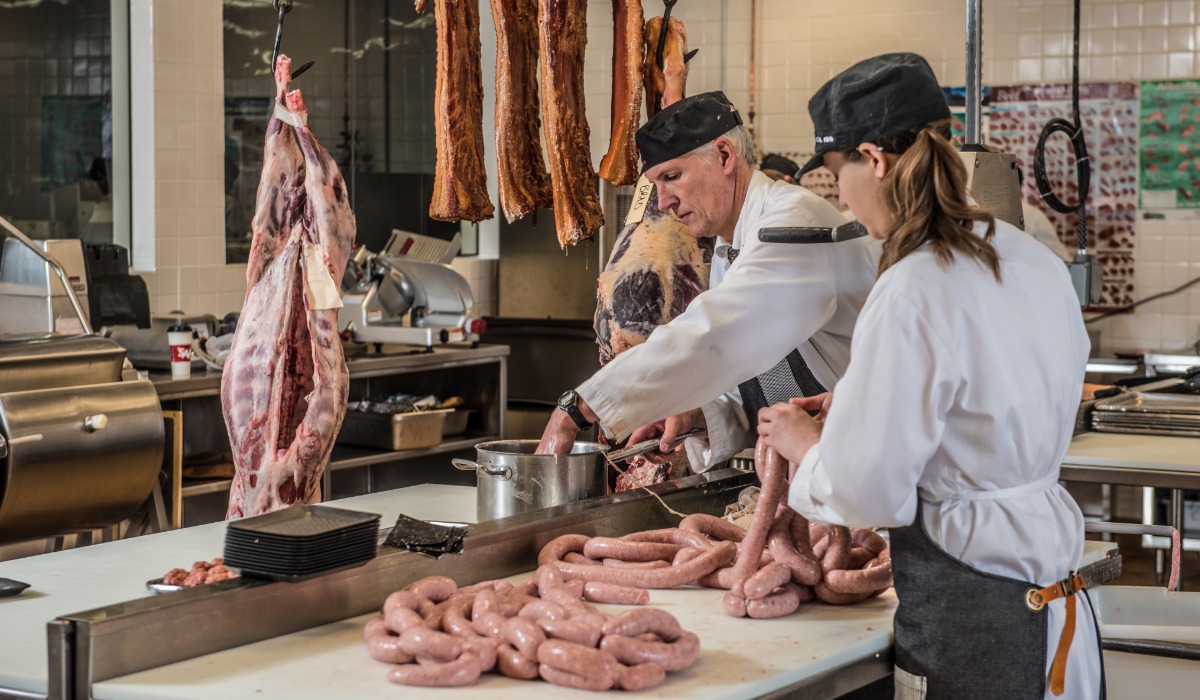
Learn specialized skills in meat cutting and charcuterie, along with customer service and business management for a career as a butcher or meat inspector.
- Program length:
- 1 year
- Location:
- In person (Main Campus)
- Faculty:
- School of Hospitality and Tourism
- Certification type
-
Diploma
- Availability
- International Students Accepted PGWP eligible
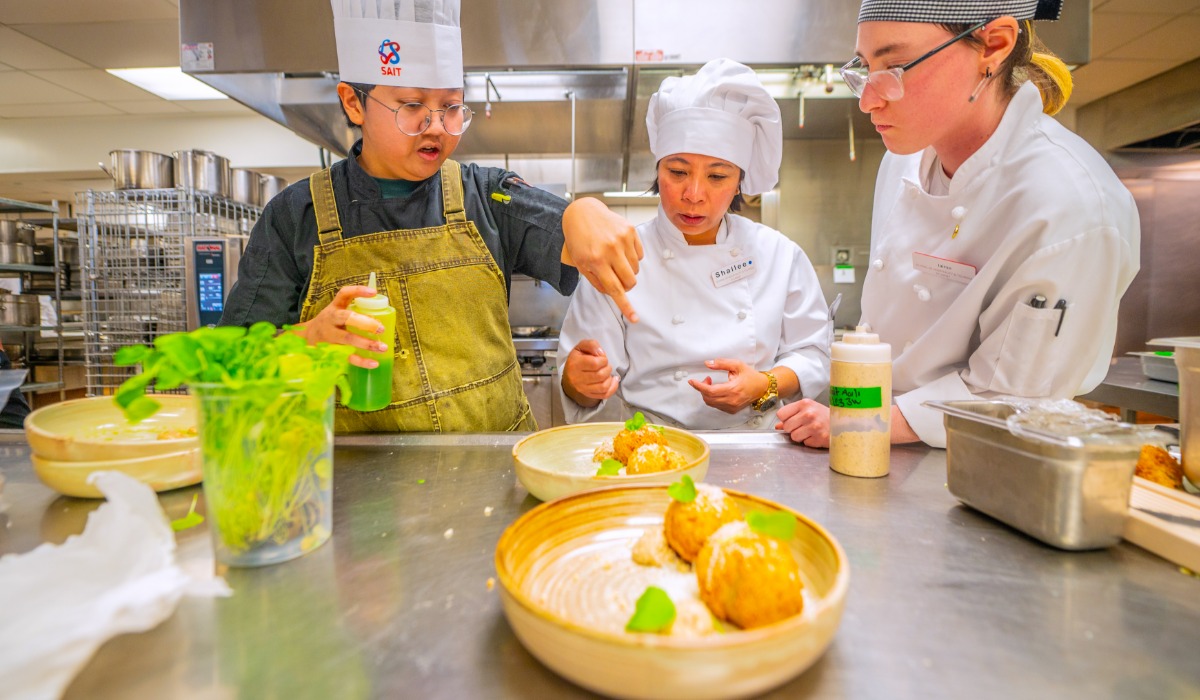
Considered one of the best in Canada, this professional cooking program is delivered by world-renowned chefs who provide expert, hands-on training.
- Program length:
- 2 years
- Location:
- In person (Main Campus)
- Faculty:
- School of Hospitality and Tourism
- Certification type
-
Diploma
- Availability
- International Students Accepted Not PGWP eligible
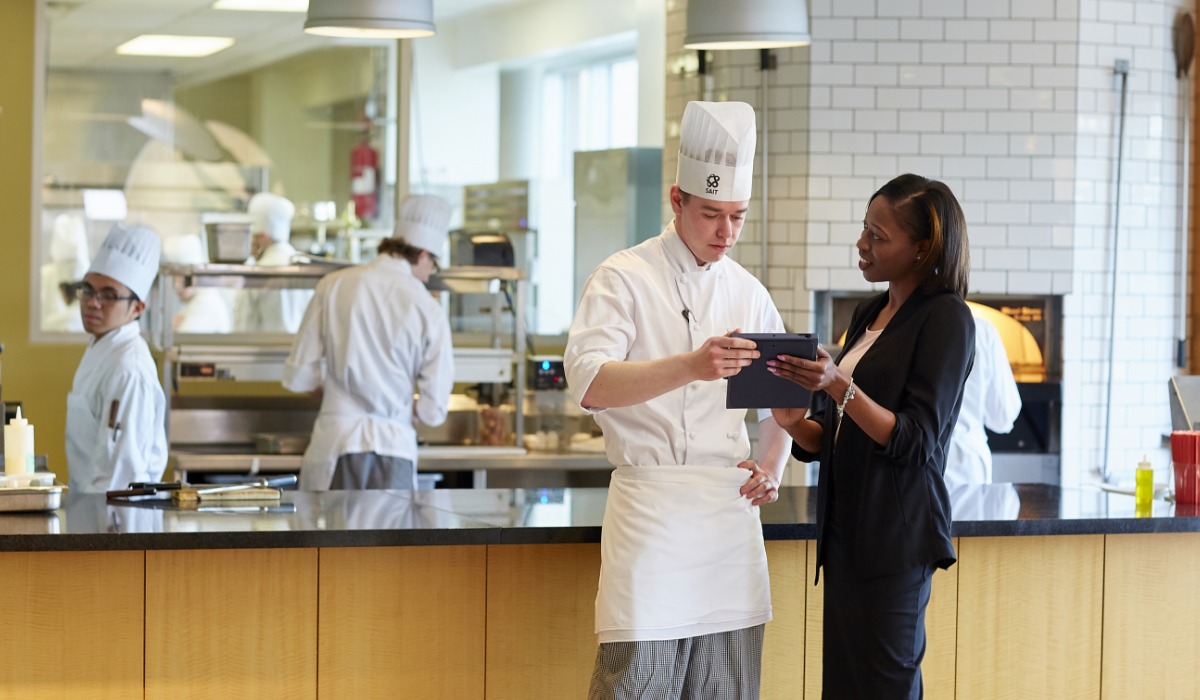
Choose a multi-disciplinary approach and select electives from various specializations to build a customized hospitality and tourism path.
- Program length:
- 2 years
- Location:
- In person (Main Campus)
- Faculty:
- School of Hospitality and Tourism

- Certification type
-
Bachelor Degree
- Availability
- International Students Accepted PGWP eligible
Move into senior positions by studying leadership and project management, intercultural communications, global tourism, sales and marketing, and sustainability.
- Program length:
- 2 years
- Location:
- In person (Main Campus)
- Faculty:
- School of Hospitality and Tourism
Subscribe for updates
Your journey starts here! Sign up to get important updates on:
- Food and hospitality programs
- Application information
- Relevant news and events

Oki, Âba wathtech, Danit'ada, Tawnshi, Hello.
SAIT is located on the traditional territories of the Niitsitapi (Blackfoot) and the people of Treaty 7 which includes the Siksika, the Piikani, the Kainai, the Tsuut’ina and the Îyârhe Nakoda of Bearspaw, Chiniki and Goodstoney.
We are situated in an area the Blackfoot tribes traditionally called Moh’kinsstis, where the Bow River meets the Elbow River. We now call it the city of Calgary, which is also home to the Métis Nation of Alberta.