Overview
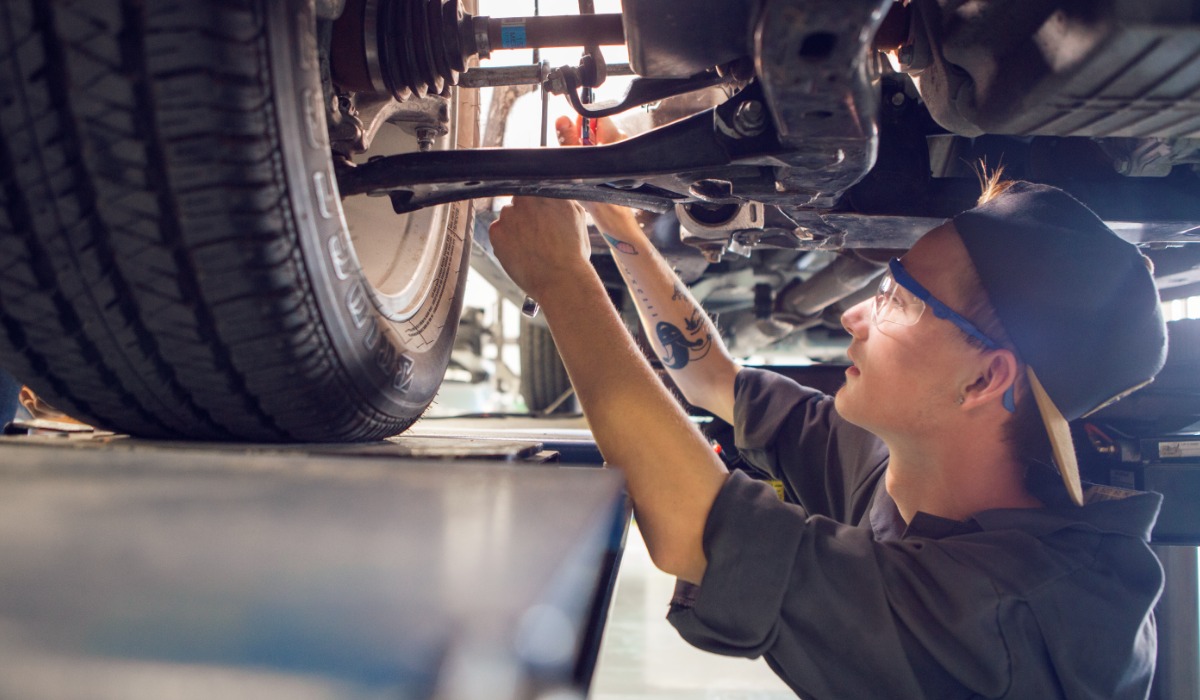
If you're looking for an alternative pathway into the automotive repair industry, our 14-week Pre-employment Automotive Service Technician program is your key.
This program provides a condensed and focused curriculum to quickly prepare you for a career in automotive repair.
As a student, you will:
- learn how to perform routine maintenance tasks to keep vehicles running smoothly
- gain the ability to identify common issues in vehicles and perform initial diagnostic procedures to pinpoint problems
- learn the basics of repairing cars and light-duty trucks, setting a solid foundation for more advanced repair work in the future
- get hands-on practice using state-of-the-art tools and equipment
- learn safe working practices and how to use tools and equipment effectively
- gain expertise in wheel alignments, which are essential for vehicle stability and tire wear
- learn about suspension and steering
- learn how to service and repair braking systems
- learn the basics of electrical work in automotive repair.
You'll also have the valuable opportunity to work in an operational shop as an automotive service technician.
Enrolling in our Pre-employment Automotive Service Technician program gives you a strong foundation, hands-on experience, and the skills necessary to kickstart your career.
Those working as automotive service technicians tend to be objective, innovative and methodical.
You need:
- good hearing, eyesight and manual dexterity
- mechanical aptitude and interest
- a working knowledge of electricity, electronics and computers
- customer service skills
- a driver's license.
You should enjoy performing tasks requiring precision, working independently and with your hands.
This program aligns with the first period of Alberta Apprenticeship and Industry Training's (AIT) Automotive Service Technician curriculum.
Graduates are eligible to register as apprentices and challenge the first-period exam.
Once you pass the exam and complete the necessary training hours with an employer, you may register for SAIT's Automotive Service Technician apprenticeship program beginning in period two.
After successfully completing this program, you'll receive a SAIT Pre-employment Automotive Service Technician certificate.
Careers and opportunities
Each year, SAIT conducts a survey between February and April to determine the employment rate, salary and satisfaction of our newest SAIT alumni.
 89% graduate employment rate
Find out more about our graduate employment statistics >
Our graduates may work in the following occupations. Some careers require additional experience and education.
Associated National Occupational Classification (NOC) codes: 72020, 72410, 74203, 94200.
Career planning support
Unsure which career path is for you? Here are some recommended career planning resources to help you decide your future.
You can also head to Alberta alis for lots of information about careers in Alberta, including quizzes and labour market information to help you narrow down a path.
Finally, you can take our online career finder quiz, which can help narrow your options based on your current skills and interests.
Courses
The Pre-Employment Automotive Service certificate requires 15 credits (six courses) to complete.
| Course | Credits |
|---|---|
|
In this course you will explain basic electrical principles and the principles of magnetism. You will perform electrical circuit measurements. You will diagnose and service batteries. You will diagnose and repair simple electrical circuits. You will use industry standard scan tools and software to complete basic operations. |
1.5 |
|
This course introduces foundational mathematical concepts required across a wide range of technical and skilled trade programs. Learners apply whole numbers, fractions, decimals, ratios, proportions, and percentages to solve practical, trade-related problems. The course also emphasizes measurement systems, including metric and imperial units, unit conversions, basic algebraic operations, and introductory geometry. Mathematical problem-solving is contextualized through authentic workplace scenarios common to technical and skilled trades. |
1.5 |
|
This course familiarizes you with industry standards and best practices, as well as common materials, tools and procedures in the automotive service trade. You will learn to apply legislation and regulations that ensure safety, including using industry standard practices for climbing, lifting and hoisting, fire protection and working with hazardous materials. You will learn about common specialty hand tools and electronic service information. You will also learn to communicate using industry standard terms and units for parts and operation, measure components using common tools, and assemble components using common fasteners, adhesives and sealers. |
1.5 |
|
In this course, you will analyze the design and operating principles of frames, suspension systems and steering systems. You will diagnose and repair mechanical problems related to electrically- and hydraulically-assisted steering gears. This course will also cover drive shafts and steering columns, providing opportunities for hands-on learning as you perform alignment procedures, service drive shaft assemblies, and diagnose problems with steering-related safety devices. |
6 |
|
In this course you will describe brake system principles and operation. You will diagnose and repair: brake system hydraulic components; drum brake systems; disc brake systems; and power brakes. You will diagnose and service brake systems. |
3 |
|
In this course you will learn about basic maintenance routines for vehicles as well as service procedures for light utility trailers. In addition, you will learn Air conditioning principles and safe recharging practices. |
1.5 |
Progression
You must attain a PGPA and/or a CGPA of 2.0 or better each semester and pass the prerequisite courses to progress through the program.
To qualify for graduation, you must pass all courses, attain a CGPA of 2.0 or better and complete course requirements within the prescribed timelines.
Admission requirements
Applicants educated in Canada
Applicants must demonstrate English language proficiency and completion of the following courses or equivalents:
- English Language Arts 30-1 or English Language Arts 30-2, and
- Math 20-1 or Math 20-2 or Math 20-3, and
- one Grade 11 Science.
SAIT accepts high school course equivalents for admission for applicants educated outside of Alberta.
All applicants who were educated outside of Canada must demonstrate English language proficiency and provide proof they meet the program admission requirements with an international document assessment. Find accepted educational documents and assessment options.
SAIT may also accept courses completed at certain international post-secondary institutions.
Academic Upgrading
Missing an admission requirement for this program? Upgrade your prior education to help you receive admission into one of SAIT's career programs.
English language proficiency
All applicants must demonstrate English language proficiency prior to admission, including students educated in Canada.
Transfer agreements
At SAIT, we have created transfer agreements with partner institutions to allow you to earn course credits toward your SAIT program based on your previously completed credentials.
Transfer Alberta search tool
Use the Transfer Alberta search tool to search all pre-assessed transfer credit and transfer agreements between Alberta post-secondary institutions (including those with the University of Calgary, Mount Royal University and Bow Valley College.)
Transfer options for graduates
When you have completed this program, you may continue your education at a partner post-secondary institution. These transfer agreements include partnerships within and/or outside of Canada.
Available intakes
When can I start?
See upcoming intakes for this program and whether seats are still available.
This program does not accept international applicants.
Costs
2026/27 tuition and fees
The following estimated costs are effective as of July 1, 2026.
The estimated total cost of tuition and fees is based on completing the program within 14 weeks. Following a modified schedule will impact the fees you pay per semester and may alter final costs.
Domestic students
*Less than one full semester of 16 weeks.
Books and supplies are approximately $1,000 per full-time year.
This is a bring-your-own-device program with a standard computer hardware and software requirement. See the specific requirements on our computers and laptops page.
Find your booklist on the SAIT Bookstore's website. The booklist will be available closer to the program start date. Can't find your program or course? The bookstore didn't receive a textbook list. Contact your program directly to determine if they're still refining course details or if you're in luck; no textbook purchase is required this term.
Although not a requirement, you will have more success finding employment if you hold a driver's licence.
Required personal protective equipment (PPE)
CSA-approved steel-toe boots, safety glasses and coveralls are required on the first day of class.
Financial aid
Paying for your education may feel overwhelming, but we have resources and programs that can help, including information about payment options, student loans, grants and scholarships.
Application process
Ready to apply?
Follow our step-by-step guide to submitting a successful application.
Communication during admission
Email is the primary source of communication during the selection process. Ensure your personal email account is managed appropriately to receive our emails, files and communications. We recommend you add the transportation.info@sait.ca domain to your safe senders list or you risk missing critical email messages.
Begin your application
Apply now using the online application portal.
Ensure you have a valid Visa or Mastercard to pay the non-refundable application fee of $120 for domestic applicants.
Information sessions
Prepare for a strong start in your chosen program or get the details you need to decide your future path.
Our expert staff and faculty are ready to answer your questions and provide information about the following:
- What sets SAIT apart
- An introduction to the program and area of study
- Admission requirements
- Future career paths
- Information on the earning potential and graduate employment rates.
Contact us
School of Transportation Advising
- Phone
- 403.284.8471
Other programs you may be interested in
- Certification type
-
 Certificate
- Availability
- Not available to International Students
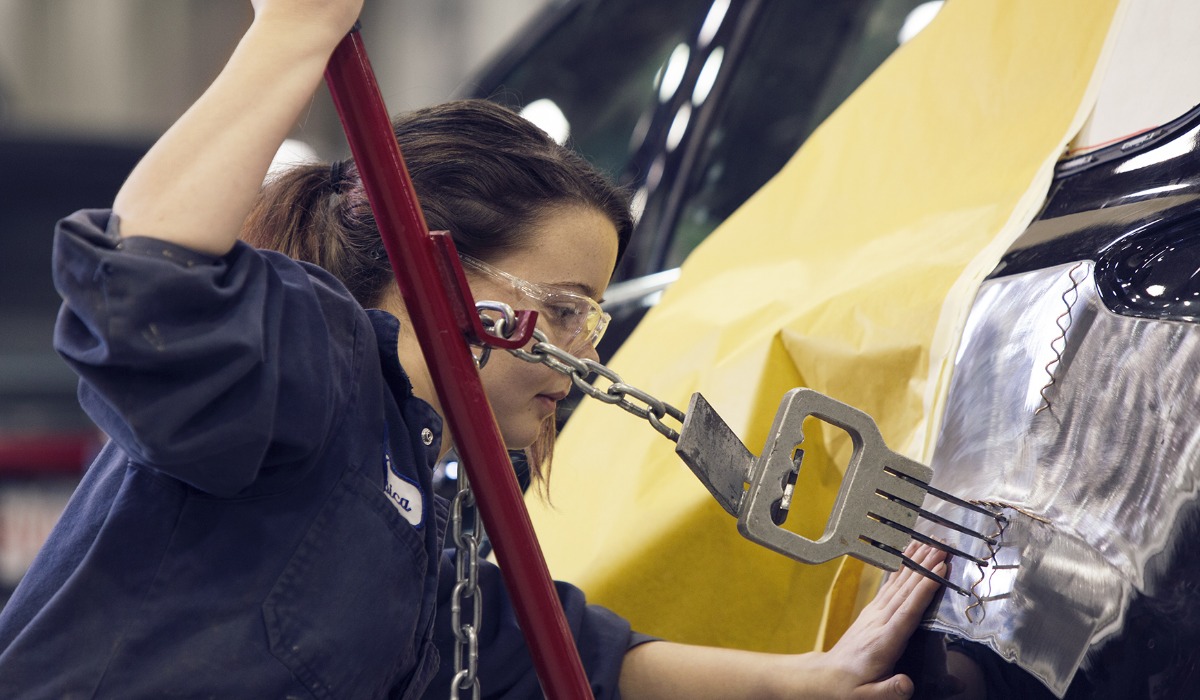
Train for a career as an auto body technician where you will be able to conduct damage appraisals, repairs, color matching, priming and top coating.
- Program length:
- 12 weeks
- Location:
- In person (Main Campus)
- Faculty:
- School of Transportation
- Certification type
-
Diploma
- Availability
- International Students Accepted Not PGWP eligible
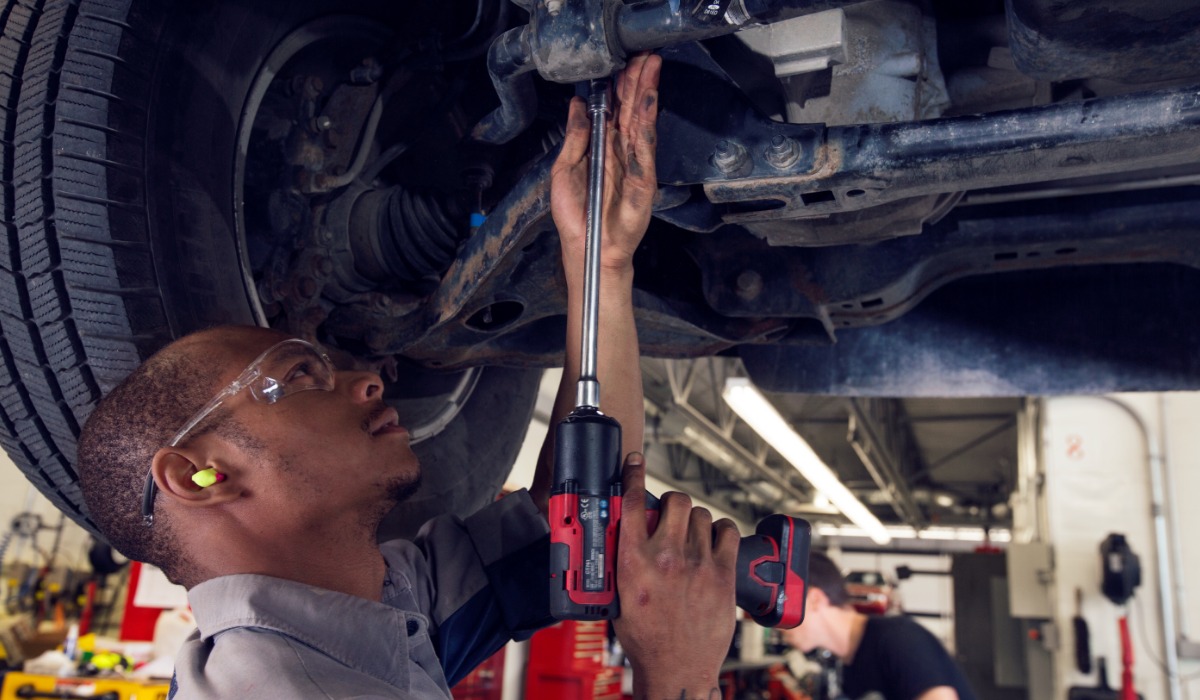
Train for a career repairing and maintaining cars and trucks in this program that prepares grads to move into positions such as shop foreman or service manager.
- Program length:
- 2 years
- Location:
- In person (Main Campus)
- Faculty:
- School of Transportation
- Certification type
-
Journeyperson
- Availability
- Not available to International Students
This program will train you to repair and replace damaged motor vehicle structures and body components and apply interior and exterior finishes.
- Program length:
- 2 to 4 periods
- Location:
- In person (Main Campus) or Blended (Main Campus and Online)
- Faculty:
- School of Transportation
- Certification type
-
Journeyperson
- Availability
- Not available to International Students
Develop a strong understanding of automotive service, including the ability to diagnose malfunctions, suggest preventative maintenance, and perform repairs.
- Program length:
- 4 periods
- Location:
- In person (Main Campus) or Blended (Main Campus and Online)
- Faculty:
- School of Transportation
Subscribe for updates
Your journey starts here! Sign up to get important updates on:
- Transportation and logistics programs
- Application information
- Relevant news and events

Oki, Âba wathtech, Danit'ada, Tawnshi, Hello.
SAIT is located on the traditional territories of the Niitsitapi (Blackfoot) and the people of Treaty 7 which includes the Siksika, the Piikani, the Kainai, the Tsuut’ina and the Îyârhe Nakoda of Bearspaw, Chiniki and Goodstoney.
We are situated in an area the Blackfoot tribes traditionally called Moh’kinsstis, where the Bow River meets the Elbow River. We now call it the city of Calgary, which is also home to the Métis Nation of Alberta.