Beyond the spotlight: How students made FutureTech happen
What better way to learn how to plan and produce a professional event than actually doing it?
Earlier this year, SAIT hosted FutureTech — a business pitch-style showcase that brought students, investors, industry leaders and entrepreneurs together on campus.
The event allowed students to present their ideas to a panel of judges, with those demonstrating the greatest ability for growth and impact having the chance to receive funding through the Bissett Seed Fund.
While one group of students took the stage at FutureTech, another worked behind the scenes to make it happen.
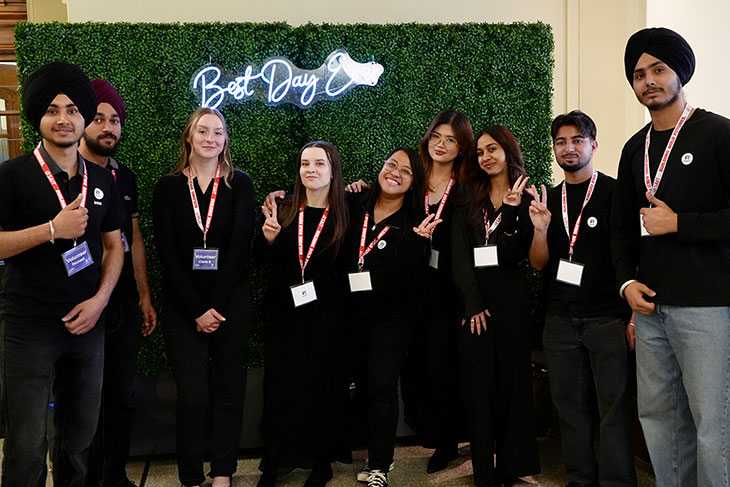
For 28 Administrative Information Management (AIM) and six Film and Video Production students, the classroom became a live event as they worked with their instructors to deliver the FutureTech event for a real audience — experiencing the kind of cross-team collaboration they could encounter in their future careers.
Different programs, one shared goal
Preparing for FutureTech started long before guests arrived.
In instructor Angela Flanagan's Event Planning course, the 28 AIM students were responsible for a variety of different aspects of the event, including logistics, guest services and day-of operations.
"Students were assigned to different sub-committees based on the needs of the event and their interests and abilities," says Flanagan. "This allowed them to experience the same type of collaboration they would encounter when working on a professional event team."
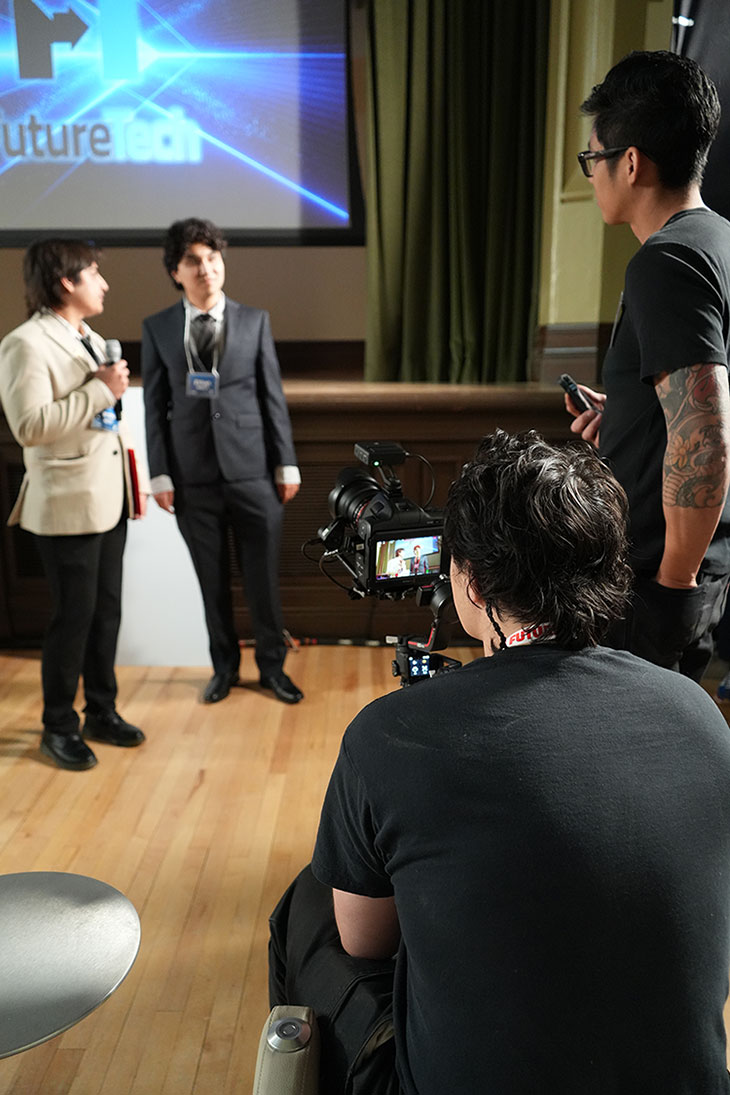
Film and video students brought another set of skills to the project. They worked with the client team, completed site visits, tested lighting and audio, planned camera positions and prepared to document the event through interviews, footage and promotional content.
For Film and Video Production instructor Damien Mustaphi, the scale of FutureTech meant students had to approach their work professionally from the beginning.
"This was a live event with industry guests, investors, entrepreneurs and venture capitalists in attendance," says Mustaphi. "It was important to choose students who could work independently, communicate effectively and take ownership of their responsibilities throughout both the planning and execution of the event."
Where the classroom meets the workplace
When event day arrived, the students took responsibility.
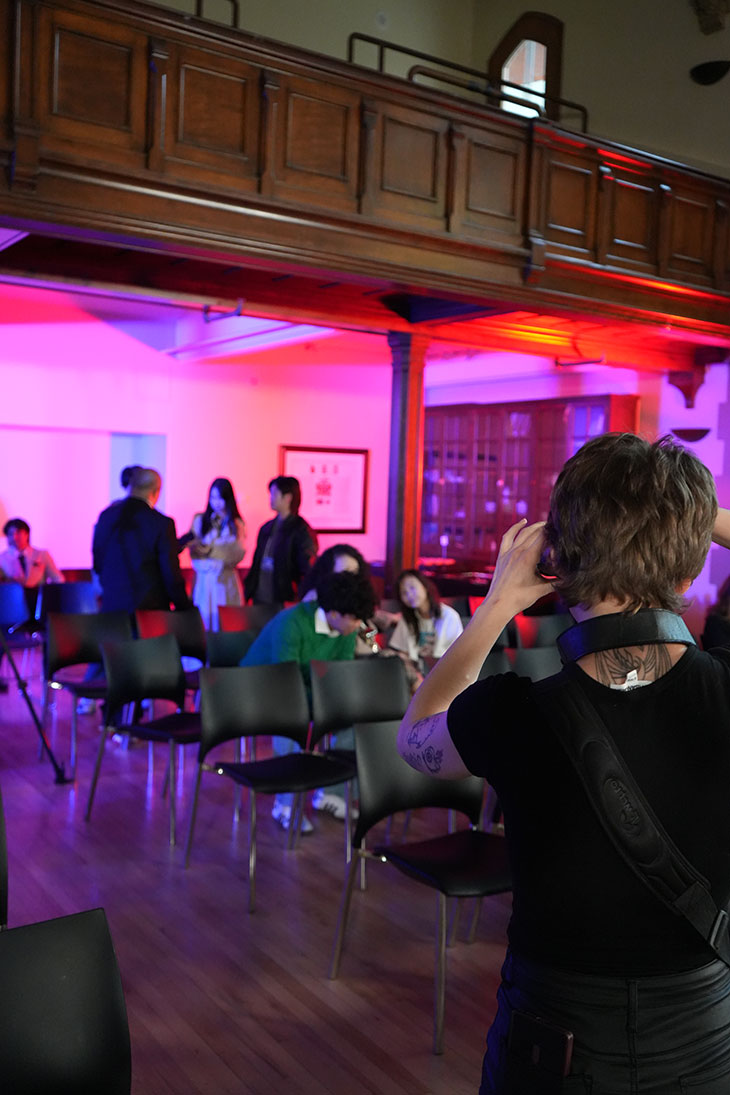
AIM students coordinated registration, welcomed attendees, supported judges and speakers, answered questions and helped ensure the guest experience ran smoothly.
Film and Video Production students monitored equipment, captured footage and interviews, and responded to changing production needs throughout the event.
"FutureTech wasn't an assignment or project students were submitting for a grade," says Flanagan. "The event was happening in real time, and students had to be ready to respond, collaborate and adapt. There was no 'redo' button.”
For Film and Video Production students, their work carried the same kind of responsibility.
"Students weren't creating work solely for evaluation," says Mustaphi. "They were participating in an experience that directly impacted presenters, investors, judges and audience members. The quality of their work directly influenced the overall experience of the event."
From coordinating across multiple committees to finding a solution when a judge required an alternative meal, students saw firsthand how preparation, communication and adaptability come together when delivering an event.
For SAIT alumnus Gursh Bal, co-founder and Chief Growth Officer of Zeno Renewables and a FutureTech judge, experiences like these help students develop more than technical skills.
"FutureTech gave students access to one of the most important life lessons: building confidence," says Bal.
By bringing ideas to life, presenting their work, and handling challenges with real stakes, Bal says students had the opportunity to test themselves in a professional environment and discover they could do more than they thought.
Learning to take ownership
For Film and Video Production student Dante Laratta, FutureTech became one of the biggest projects he had ever taken on.
Unlike a typical classroom assignment, there wasn't a detailed rubric or step-by-step process telling him exactly what to do next.
"I was working for a client who trusted me and the skills I've developed to deliver them a quality product," says Laratta. "Every step of the process had to be constructed from scratch."
As the project grew, so did its complexity. Technical requirements expanded, expectations increased and the scale of the production got overwhelming at times.
"The instructors formed a team around me to help alleviate that pressure and really allowed me to focus on executing the idea I had for FutureTech while they supported the technical requirements," he says.
That balance between independence and support allowed students to put their skills into practice while learning something equally important: how to collaborate, ask for help, solve problems and contribute their expertise as part of a larger team.
Confidence built through experience
By the end of FutureTech, students had done more than help deliver a successful event. They had experienced what it was like to be trusted with meaningful responsibilities, work alongside people with different areas of expertise and see the effect of their work on a real audience.
For Laratta, the experience challenged him to see his own abilities differently.
"I learned two opposite things," he says. "The first was that I can't do everything. The second was that I can do a lot of things."
Looking back at what the team accomplished, that realization got even clearer.
"I had no idea I was capable of doing anything even close to what we achieved."
Flanagan witnessed similar growth among her students.
"I hope they now realize that they are far more capable than they initially believed," she says. "Most students were unsure about what to expect and by the end they had successfully contributed to a major event and witnessed the impact of their work firsthand."

Oki, Âba wathtech, Danit'ada, Tawnshi, Hello.
SAIT is located on the traditional territories of the Niitsitapi (Blackfoot) and the people of Treaty 7 which includes the Siksika, the Piikani, the Kainai, the Tsuut’ina and the Îyârhe Nakoda of Bearspaw, Chiniki and Goodstoney.
We are situated in an area the Blackfoot tribes traditionally called Moh’kinsstis, where the Bow River meets the Elbow River. We now call it the city of Calgary, which is also home to the Métis Nation of Alberta.