Overview
Discover how geology helps explain where oil and gas are found and why some reservoirs are more productive than others.
In Introduction to Petroleum Geology, you’ll build a practical foundation in the geological principles that underpin upstream oil and gas operations. You’ll explore how rocks form, how hydrocarbons accumulate, and how reservoir characteristics influence production potential. You’ll also examine how geological and geophysical data are used to map subsurface conditions, identify reservoirs, and support exploration and development planning.
This course is delivered online in a flexible asynchronous format, allowing you to learn at your own pace. Industry-experienced instructors support your learning by answering questions, clarifying concepts, and providing feedback. Your progress is assessed through assignments, quizzes, and a final exam.
By the end of this course, you’ll be able to interpret foundational geological information, explain how reservoirs are identified and evaluated, and contribute to discussions about exploration targets and development planning.
This course is ideal if you:
- want to understand how oil and gas reservoirs form and are identified
- work in a role that requires awareness of subsurface conditions in upstream oil and gas
- are entering the energy sector and need a geology foundation
- want to better follow exploration and development discussions.
No formal prerequisites are required for this course. This course is designed for learners at a range of experience levels. A basic comfort with science concepts may be helpful, but all key ideas are introduced within the course.
Upon successful completion of this course, you'll be able to:
- describe rock types and their origin
- describe the structure of the earth’s crust
- explain the origin and characteristics of sedimentary reservoir rocks
- describe oil and gas reservoirs
- describe mapping of geological information
- describe how geological and geophysical data are used to identify and develop reservoirs
- describe the selection of proposed exploration drilling targets.
To request a course outline, contact ConEdAdvising@sait.ca.
Upcoming dates
Select an available section and add it to your cart. When you're ready, proceed to check out to sign into your student account and complete your registration.
Don't have a student account? Let's set one up!
Registration closes seven days before the start date for on-campus, online scheduled, and blended courses, and one day before the start date for online self-paced courses.
After you've completed this course
Upon successful completion of this course, you'll be able to self-print a proof of completion document from your Continuing Education student account.
Costs
Textbook and reading list
Included in the purchase of this course, you'll receive access to online course content in Brightspace (D2L).
Technology
To be successful in this course, you’ll need:
- Access to your own computer or laptop with standard hardware/software requirements
- Internet access.
Financial support
Financial opportunities are available to help pay for your course fees. Learn more about how to reduce your education or training costs with available awards, bursaries, loans and grants, including the Canada Alberta Productivity Grant.
Applicable certificates
This course applies to the following certificate programs:
- Certification type
-
 Certificate of Completion

Train your team
Interested in group training opportunities for this course? Tell us about your organization's needs, and one of our training consultants will contact you within one business day.
Stories and news

New SAIT and Mastercard partnership targets cybersecurity gaps facing Canada’s small businesses and non-profits
MEDIA RELEASE - SAIT and Mastercard collaborate to expand access to cybersecurity learning and help organizations in Western Canada strengthen their digital resilience.
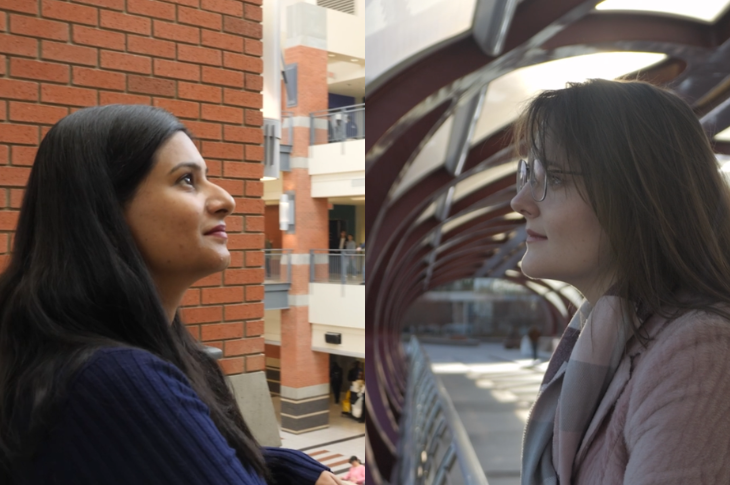
From landing in Canada to landing dream jobs: Newcomers upskill with SAIT’s professional programs
Kanika from India and Lydia from Ukraine gained experience and confidence to take their careers to the next level
Oki, Âba wathtech, Danit'ada, Tawnshi, Hello.
SAIT is located on the traditional territories of the Niitsitapi (Blackfoot) and the people of Treaty 7 which includes the Siksika, the Piikani, the Kainai, the Tsuut’ina and the Îyârhe Nakoda of Bearspaw, Chiniki and Goodstoney.
We are situated in an area the Blackfoot tribes traditionally called Moh’kinsstis, where the Bow River meets the Elbow River. We now call it the city of Calgary, which is also home to the Métis Nation of Alberta.