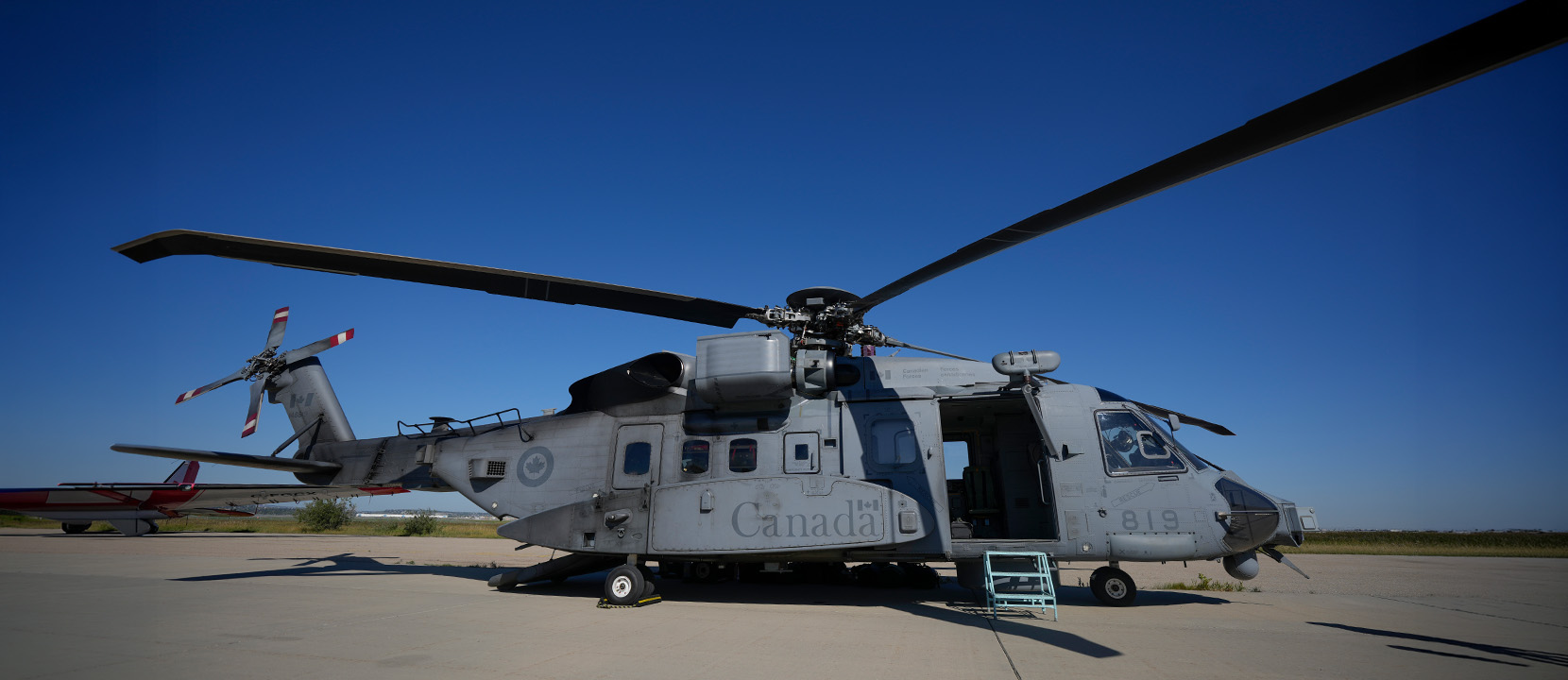
In this issue
Discover how the Canadian Armed Forces are turning to SAIT for help meeting their urgent skills training needs — and meet alumni serving their country in some unexpected ways. Take a trip through time in honour of SAIT's 300,000th graduate crossing the stage, and look ahead to research exploring new possibilities for hydrogen storage. Plus, Mark Tewksbury's culinary journey, a century-home renovation and practical tips for inspiring change.
FEATURE
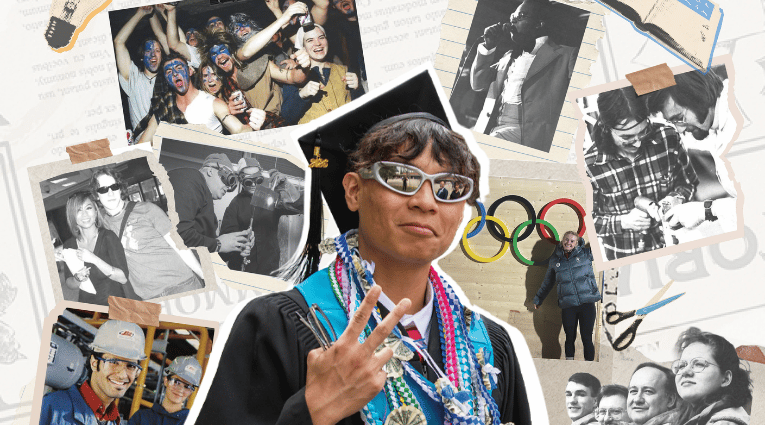
300,000 alumni; 300,000 stories: The five eras that shaped us
As SAIT reaches a graduate milestone, LINK looks at some of the moments, innovations and memories that connect generations of alumni.

FEATURE
Serving the military: today, yesterday and tomorrow
Since its earliest days, SAIT has supported the Canadian Armed Forces through training, education and meeting the moment.

PRO TIPS
Pro Tips: inspiring action and change at work
Curtis Braun, adjunct instructor with SAIT's Continuing Education and Professional Studies (CEPS), shares four unexpected ways to gain support for your ideas and become more influential at work.

PROFILE
Cooking up creativity and connection
Olympic gold medalist and 2SLGBTQ+ activist Mark Tewksbury's career takes a culinary turn.
ON THE JOB
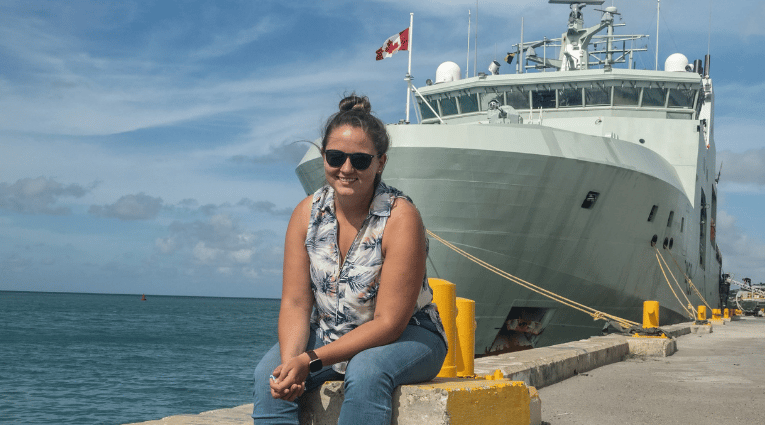
On the Job: Sarah Jensen
A self-described unicorn within Canada's military, Sarah Jensen is a Hospitality Management ('12) grad in unchartered waters.

INNOVATION
Taking the pressure off hydrogen
SAIT researchers are exploring novel approaches to hydrogen storage that could create powerful new ways to fuel vehicles and aircraft.
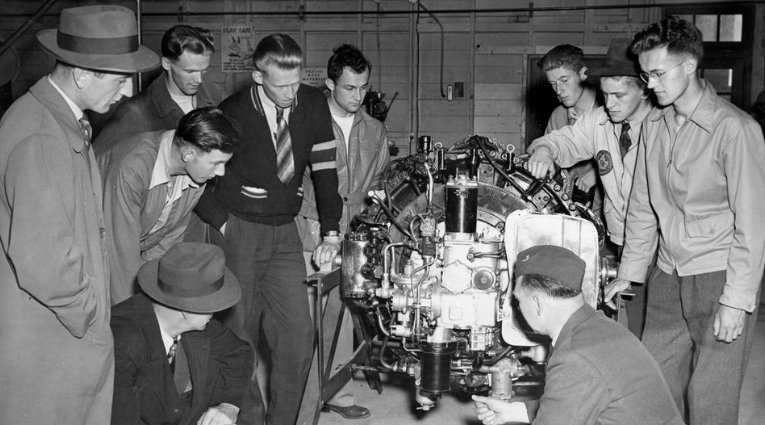
LOOKING BACK
Looking Back: 1949
With Canada's first non-stop, coast-to-coast flight being successfully completed in January 1949, civil aviation was on course for rapid expansion. Demand for highly trained personnel — like these Aeronautics Department students — took off.

Contributors
@bumblee-dee, chuenmanuse, Canadian Bureau for International Education, Canadian Forces Leadership and Recruit School, Canadian Forces Health Service (Pacific), Nancy Cope, Digital Collections at the University of Calgary, Shelby Earle, Edzel Echarri, Colesen Faunt, HarderLee Photography, Leah Hennel (Photojournalism '98), Monique Klak, Kokemor Studio, Melanie and Steve Bewick Krentz, Norman Leach, Jordan Munro, NASA/Public domain, Kelsey Nixon, Keagan Perlette; peterschreiber.media, Getty Images; SAIT, SAIT Archives, Saitsa Historical Archives, Jacek Syzmanski, Lisa Tahn, Giselle Wedemire (Graphic Design '23, Journalism '13)
In the spotlight
In every issue of LINK, we introduce readers to a fellow SAIT graduate whose work is featured in that edition.
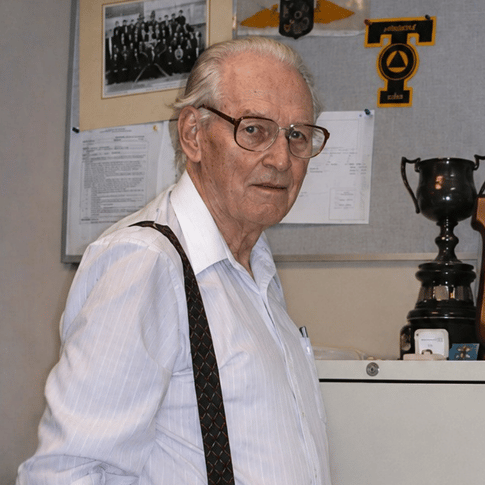
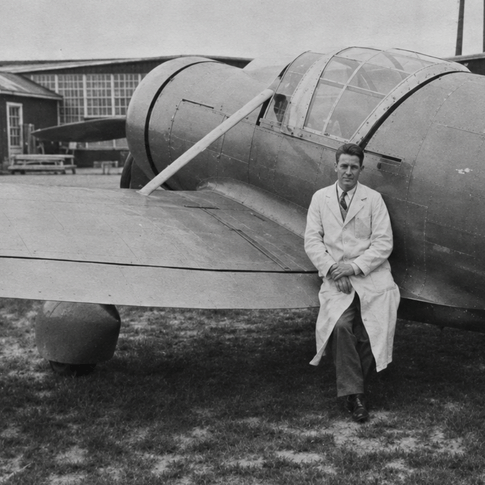
George Ryning (Aeronautical Engineering '49)
Featured in: Looking Back: 1949
Although George Ryning did not photograph the scene in this issue’s installment of Looking Back, he was an active contributor to the preservation of this and other glimpses from SAIT’s history.
Born in Rowley, Alberta in 1922, Ryning enlisted in the Royal Canadian Air Force in 1942. For the rest of the Second World War, he served as an airframe mechanic in Dartmouth, Nova Scotia and Gander, Newfoundland. After the war, he enrolled in the Aeronautical Engineering program at the Provincial Institute of Technology and Art (PITA, now known as SAIT) in 1946.
After graduating in 1949, Ryning worked for six years in the aircraft industry as a draftsman and engineer before becoming a junior instructor at PITA in 1955.
In 1971, a secondment with the Canadian International Development Organization (CIDA) sent Ryning and his family to Africa to establish an Aircraft Maintenance program with the Zambian Air Services Training Institute. After returning to SAIT in 1974, he designed and taught aeronautics courses, retiring as Program Supervisor of the Aeronautics Department in 1984.
In retirement, Ryning combined his passion for aviation and teaching by volunteering at the Calgary Aero Space Museum and at the SAIT Archives, located in the Reg Erhardt Library.
George Ryning died in 2012 at the age of 89, and a collection of materials he had carefully saved was donated to the Archives by his widow, Doreen. Stretching from the 1920s through 2005, the George Ryning Fonds (an archival term for the records of a person or organization) provide fascinating historical insights into aeronautics classes at SAIT through lecture notes, course outlines, correspondence and other documents.
But perhaps the most evocative item from Ryning’s collection is the stylish sweater he is shown wearing in the Looking Back photo — a tangible, human connection with SAIT’s past.
“Aarchives help us remember where we’ve come from and preserve the stories that have shaped our Institution and its community,” says SAIT Archivist Karly Sawatzky. “For me, the most meaningful part is capturing the student experience — the people, traditions, and everyday moments that make the SAIT experience what it is — so those stories can continue to be remembered and shared for years to come.”

Oki, Âba wathtech, Danit'ada, Tawnshi, Hello.
SAIT is located on the traditional territories of the Niitsitapi (Blackfoot) and the people of Treaty 7 which includes the Siksika, the Piikani, the Kainai, the Tsuut’ina and the Îyârhe Nakoda of Bearspaw, Chiniki and Goodstoney.
We are situated in an area the Blackfoot tribes traditionally called Moh’kinsstis, where the Bow River meets the Elbow River. We now call it the city of Calgary, which is also home to the Métis Nation of Alberta.