Feature photo by @bumblee-dee
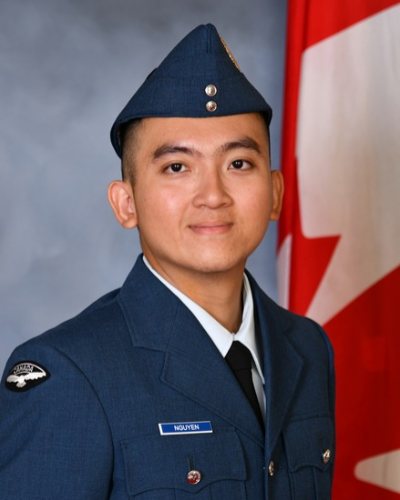
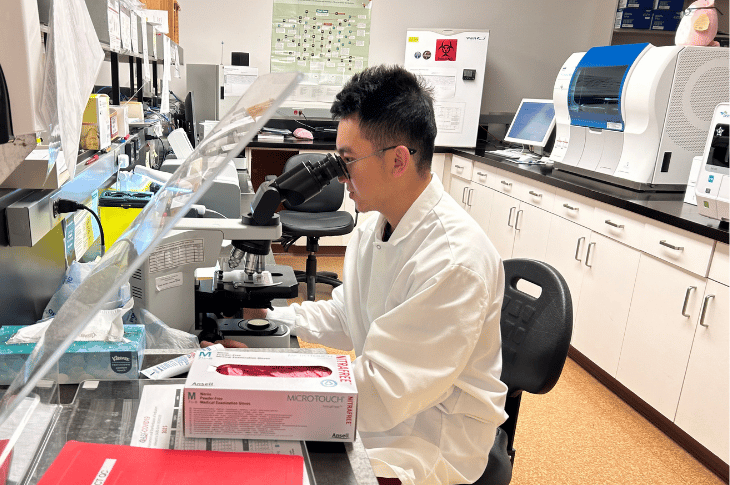
It's been a busy morning for Huan Trung Nguyen, who has just finished his shift when he speaks with me via Teams.
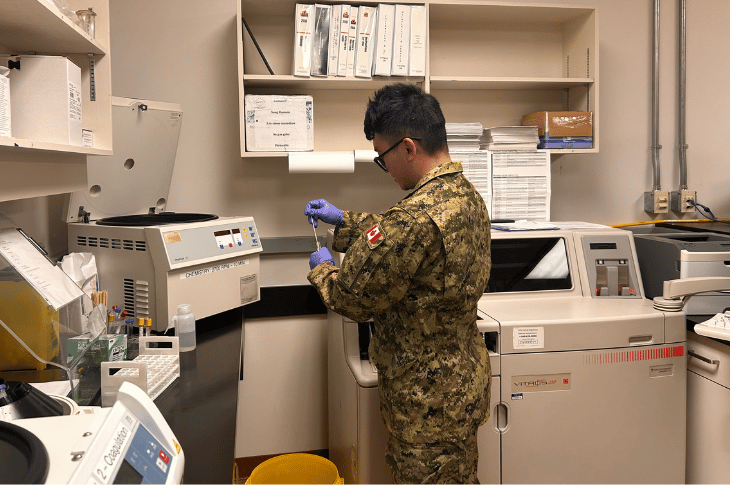
As a medical laboratory technologist, he collects blood and other samples which he then tests to provide clinicians with the data they need to help make their diagnoses.
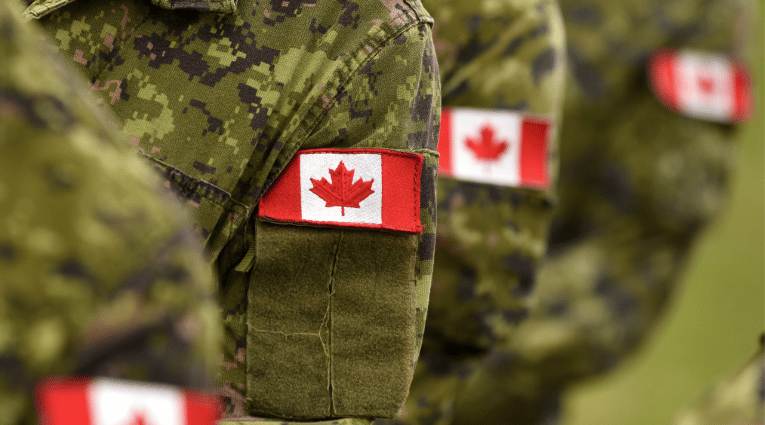
But what may surprise you about Nguyen (Medical Laboratory Technology ’24) is that the sleeves his patients roll up are the military service dress uniforms worn by those serving at Canadian Forces Base Esquimalt, located west of Victoria, B.C.
“Most people know about the operational side of the military,” Corporal Nguyen says. “When you think of the military, you probably think of the infantry — people who hold guns and rush into the battlefield, or fly warcraft like in the movies.
"But there are other sides to the military, too. These include health services, made up of healthcare professionals like myself who work together as a team to provide medical care so military members stay healthy and are able to be deployed."
He's one of countless people working behind the scenes with the Canadian Armed Forces (CAF), which includes the Royal Canadian Navy, the Canadian Army, the Royal Canadian Air Force and the Canadian Special Operations Forces Command.
Many of those people are SAIT alumni, working in ways both expected (think maintenance of aircraft, transport and heavy equipment; cooking; IT and telecommunications; emergency services; logistics officers; signal operators; weapons technicians) and unexpected (everything from human resources to financial services to public relations to musicians).
In June 2025 — with long-established international alliances shifting, technologies evolving and global conflicts intensifying — the Department of National Defence announced plans to build on Canada's 2024 defence policy, Our North, Strong and Free, with a series of foundational investments to strengthen the CAF. These investments include funding to accelerate the recruitment of 13,000 new regular and primary reserve members before 2030.
SAIT is playing a key role in reaching that recruitment goal and, as long-time sessional instructor Norman Leach says, this isn't the first time the Institute has supported Canada's military through education and skills development.
Lessons from the past
As a historian who specializes in the military, Leach is fascinated by the connections between soldiers and society — including SAIT's long history of partnership with Canada's armed forces. Established in 1916 as the Provincial Institute of Technology and Art (also known as PITA; its name was changed to SAIT in 1960), this institution was created to provide practical technical education and help re-train veterans, many of them wounded, returning from the battlefields of Europe.
"I think Canadians have lost that historic appreciation of how PITA was built as a school for World War One veterans before it became a public school, and how the land SAIT sits on today was donated by Thomas Riley, whose grandson died in that war," says Leach, who is also chair of the Western Canada Defence Industries Association.
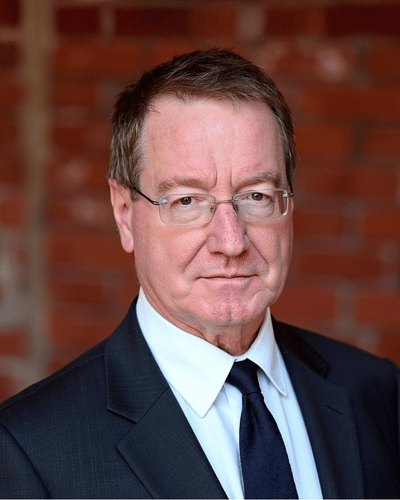
During the Second World War, PITA relinquished its campus to the No. 2 Wireless School, where soldiers from throughout the Commonwealth trained in what is today's Heritage Hall.
"We went from not being a radio training station to being a radio training station almost overnight, using the whole strength of the institution to make that happen. Because those wireless operators were desperately needed. They were trained quickly. They got super training and then got sent on active service.
"Today, we have to be just as pragmatic," he says. "Government, education and business will all have to work together, which is what this country did in WWI and in WWII. Canadians have a history of doing this. We just have to dust it off and bring it out again."
Current challenges
Leach describes the new focus on funding the military as robust and points out that, over recent decades, consecutive Canadian governments have let funding and recruitment levels slide. "We need to fix this if we're going to truly be the trusted military force we've been in the past. We have to stand on our own two feet again."
But, he says, the challenge is how fast the world is changing.
"In WWI, Canadian pilot Billy Bishop would fly a combat mission, shoot down three Germans, then land, go back to his room and write his diary. And the next morning, he'd teach the guys what he learned yesterday. Literally, 'Guys, I flew yesterday. I found out we can bank at 35 degrees rather than 25'.
"Today, Ukrainian pilots are flying drones and then coming back to the factories and telling designers, 'That didn't work. Right: this is what you need to do.' And the designers are fixing it overnight and implementing it in the factory the next morning. We're back to WWI learning at speed.
"The challenge specifically for post-secondary is we're used to longer timelines. For the military, the challenge is being overwhelmed by how quickly the changes are happening.”
Preparing for the modern battlefield
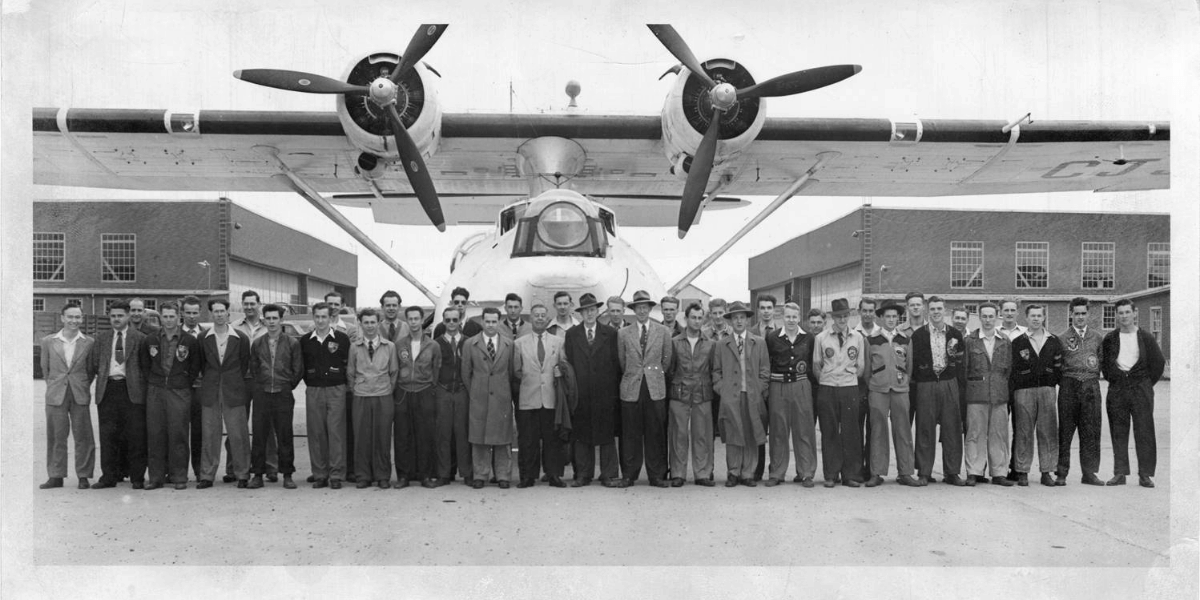
The School of Transportation’s Associate Dean of Aviation and Technology, Josh Brewster (Welding Engineering Technology '14, Welder '12), is one of many SAIT employees working to meet this challenge. He recently joined with 12 fellow post-secondaries on a tour of Latvia, Estonia and Lithuania through the Canada-Baltics Education in Defence Partnership Mission.
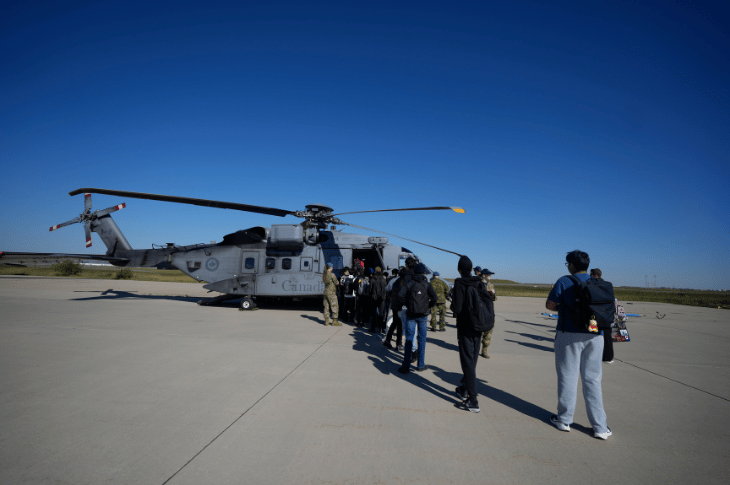
Latvia is the location for Operation REASSURANCE, which is the CAF's largest overseas mission. It involves some 2,000 Canadian soldiers and is dedicated to deterrence and defence measures across NATO's eastern flank.
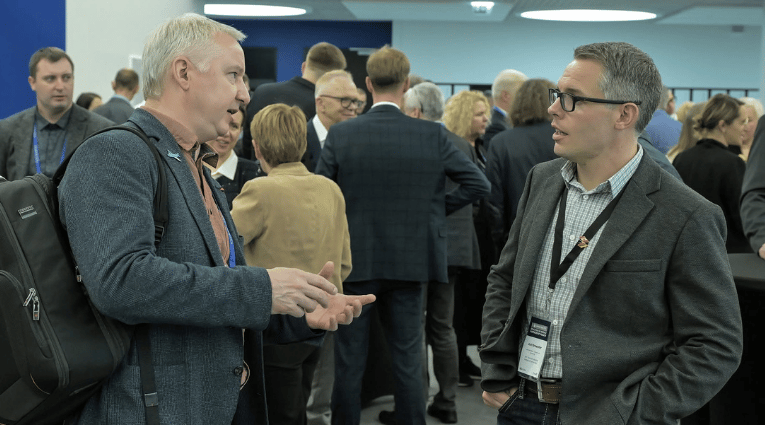
"The technology there is changing monthly, so if you want to know what's happening with technologies coming out of military innovation, Latvia is a hotbed. And Estonia is a Silicon Valley-style startup," Brewster says.
"Commanders want their troops to understand exactly what the modern battlefield looks like and to be ready to hit the ground running on week one.
"For me, the trip was all about seeing that region, bringing what I learned by to our students, and making sure our faculty have a clear line of sight to what's coming down the pipeline.
"We know we're going to be doing curriculum overhauls and updates every single year because technology is changing so quickly," Brewster says. "We're working with local partners and folks in areas like Latvia who are really on the cutting edge, and we're watching what's happening in the Baltics because it's an innovation hub."
Gaining momentum
Heather Domzal (JA '08), SAIT's Director of Industry Engagement, is part of an informal, campus-wide military and defence advisory group that's also dedicated to supporting the CAF's recruitment and training goals. Formed in fall 2025, this collaborative group is finding ways to ensure learners connected with the military have access to the educational supports and opportunities they need.
For example, in January 2025, SAIT joined the Canadian Military, Veteran and Family Connected Campus Consortium (CMFV3C). It's a national network of post-secondary institutions, the Canadian Armed Forces, Veterans Affairs Canada, and partner organizations that work together to help active CAF members, veterans, reservists and military family members navigate and achieve their academic and career objectives.
"Joining the CMVF3C is important for SAIT, and one of the reasons this work is gaining momentum across campus is because the alignment is so clear," Domzal says. "Many of the occupations the Canadian Armed Forces relies on today correspond directly with SAIT's strengths in aviation, health care, transportation, technology, energy and skilled trades."
To help meet CAF needs for training and upskilling, SAIT also offers CAF members recognition of prior learning, military leave accommodations, and eight pre-approved diploma and certificate programs through the Canadian Armed Forces Paid Education Program and the Non-Commissioned Member Subsidized Training and Education Plan (NCMSTEP). The CAF is reviewing an additional 11 SAIT academic programs to address areas where they are experiencing workforce shortages.
As well, 12 SAIT programs are currently included on the Military Occupation List (MOL), a tool that helps CAF recruiters identify graduates of specific programs who might qualify for hiring incentives.
"All of these options recognize the skills, knowledge, and experience military members bring with them while providing access to industry-recognized education and rewarding careers in service to Canada," says Hannah Temple, Senior Manager of Admissions and Transfer Affairs with SAIT's Office of the Registrar.
SAIT currently has eight programs approved through NCMSTEP and the CAF is reviewing an additional 11 programs that address areas where they are experiencing workforce shortages.
"For many learners, these programs offer a unique opportunity," Temple says. "It's a way to pursue post-secondary education with support from the Canadian Armed Forces while developing the technical, leadership and professional skills needed in today's workforce."
What it means to serve
Nguyen is where he is today thanks to completing his diploma through NCMSTEP. Although he already held a bachelor's degree in general science, he says finding a job with his degree was a struggle.
Then he saw an online ad for NCMSTEP.
"When I decided to go back to college, I didn’t want to add to my existing university debts," he says. "The NCMSTEP program offers 100% tuition and textbook coverage and, on top of that, they also offer a salary while you are a student.
"So I could fully focus on my education without worrying about finding a part-time job to cover my living expenses. As I did more investigation, I also realized, 'Oh, working in the military is so unique. You not only get to serve the members of the military, but you yourself are a soldier. You learn soldier skills. You learn how to shoot guns.
"You also have the opportunity to travel around the world. And that means you get to provide medical services to Canadian military members and to global citizens. That's just a meaningful job to do."
Leach says people who serve in the military are the same type of people who serve in police forces and fire departments. "They see something bigger than themselves. They know the risk. Every police officer and firefighter straps on their uniform in the morning and knows they might not come home that day.
"So they make a conscious decision about what serving means. It means you do it for something bigger than yourself."
In September, Nguyen was part of a team speaking with members of the British Columbia Society of Medical Laboratory Science, sharing some of his experiences working with the CAF and describing what makes military laboratory medicine different from civilian practice.
Talking with his fellow MLTs — and talking with LINK — have both given Nguyen reasons to reflect on his own career, and why he serves.
"When you work in the military, you are serving your nation, and that is a privilege not everybody has," he says. "It gives an extra sense of pride that I am able to bring my expertise in laboratory medicine to serving Canada.”
Like what you are reading?
Find more stories from past, present and upcoming issues of LINK magazine!

Oki, Âba wathtech, Danit'ada, Tawnshi, Hello.
SAIT is located on the traditional territories of the Niitsitapi (Blackfoot) and the people of Treaty 7 which includes the Siksika, the Piikani, the Kainai, the Tsuut’ina and the Îyârhe Nakoda of Bearspaw, Chiniki and Goodstoney.
We are situated in an area the Blackfoot tribes traditionally called Moh’kinsstis, where the Bow River meets the Elbow River. We now call it the city of Calgary, which is also home to the Métis Nation of Alberta.