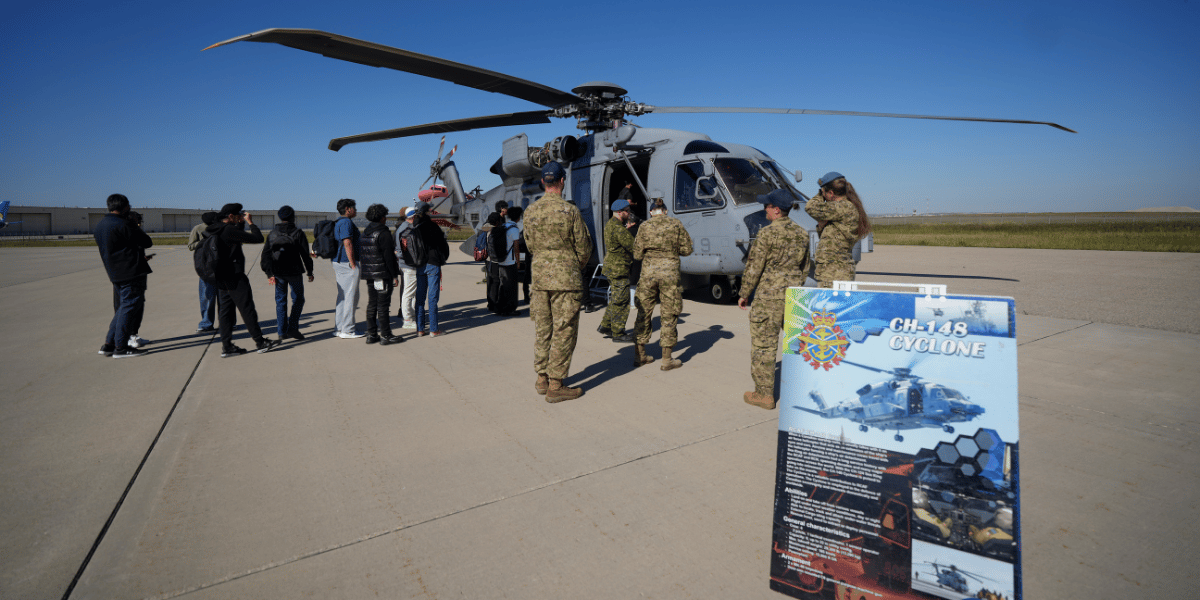
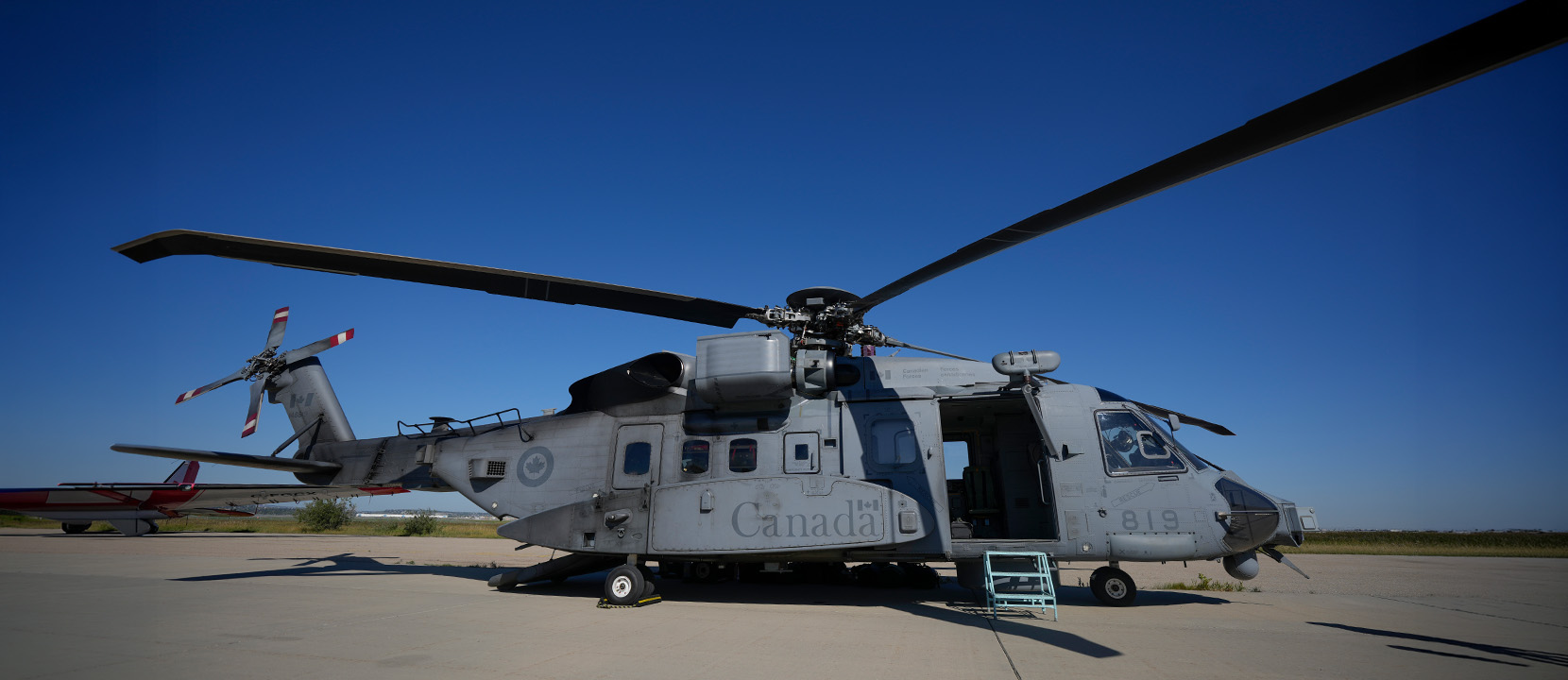
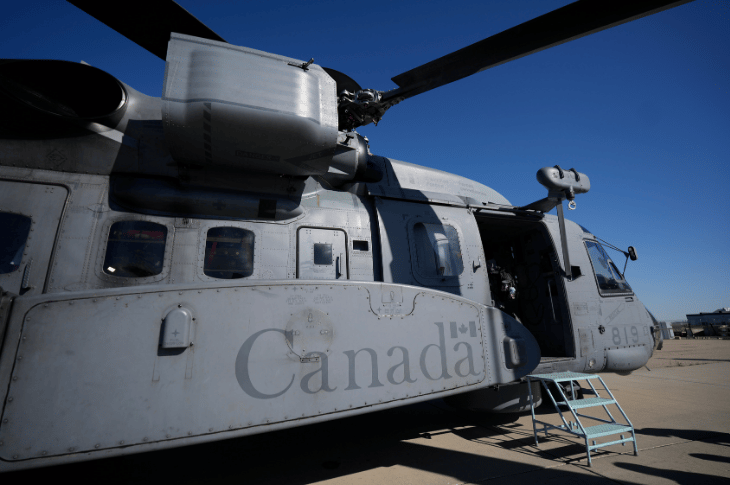
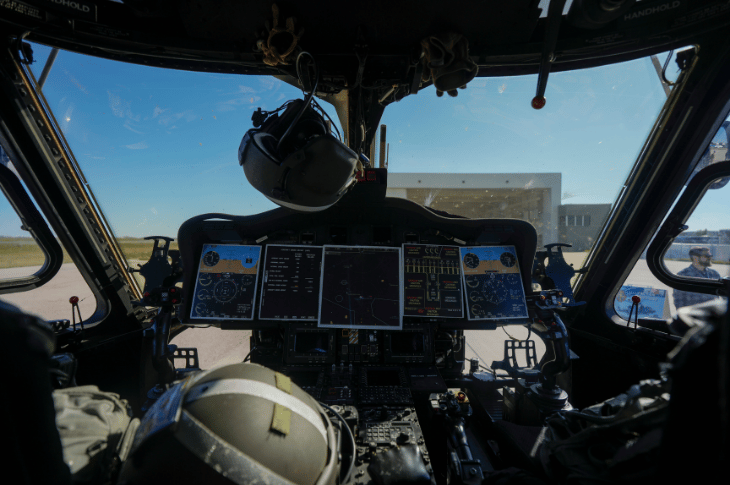
It’s an annual Fall tradition: the Royal Canadian Air Force’s Air Maintenance Branch lands one of its aircraft on the concrete apron in front of the Art Smith Aero Centre. Last year it was an F-18 fighter; this year it was a CH-148 Cyclone, a ship-borne helicopter that provides air support to the Royal Canadian Navy.
“What drives a lot of people into the aviation sector is a love for airplanes and their equipment, and some of the hardware and equipment that the military uses is extremely specialized, extremely expensive, and not generally available to the public,” says Josh Brewster (Welding Engineering Technology '14, Welder '12), SAIT's Associate Dean of Aviation and Technology.
“When do you ever get an opportunity to approach an active piece of military equipment and talk to the technicians that repair, alter and maintain it? Almost never, and that's really the unique opportunity this event gives students.”
Like what you are reading?
Find more stories from past, present and upcoming issues of LINK magazine!

Oki, Âba wathtech, Danit'ada, Tawnshi, Hello.
SAIT is located on the traditional territories of the Niitsitapi (Blackfoot) and the people of Treaty 7 which includes the Siksika, the Piikani, the Kainai, the Tsuut’ina and the Îyârhe Nakoda of Bearspaw, Chiniki and Goodstoney.
We are situated in an area the Blackfoot tribes traditionally called Moh’kinsstis, where the Bow River meets the Elbow River. We now call it the city of Calgary, which is also home to the Métis Nation of Alberta.