Feature photo by peterschreiber.media, Getty Images
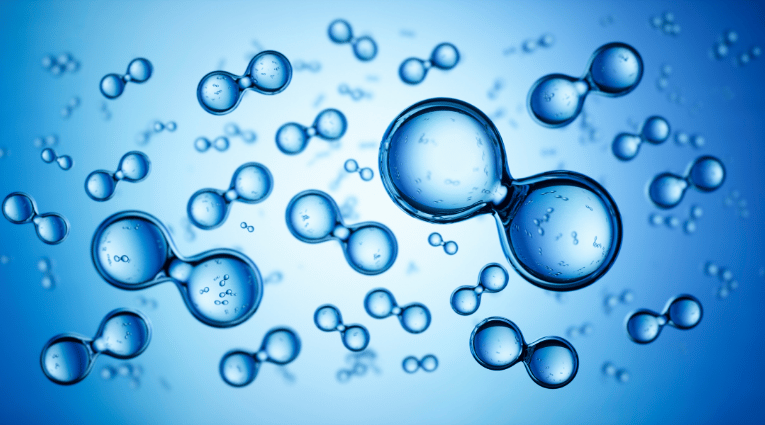
Hydrogen could help power some of the most difficult-to-electrify sectors of the economy, including transportation and aerospace. It’s the lightest element on Earth, yet one kilogram of hydrogen contains nearly three times as much energy as the same mass of gasoline. That makes it especially promising for vehicles and aircraft, where keeping weight down can improve efficiency.
The problem with hydrogen is storage. At normal temperatures and pressure, its particles are spread far apart, so the amount needed to power something like a car or plane takes up a lot of space. That’s why researchers at SAIT’s Centre for Innovation and Research in Advanced Manufacturing and Materials (CIRAMM) are exploring another approach: storing hydrogen within solid materials.
“This would reduce the risk of engineering failures inherent in the way hydrogen is typically stored, which involves compressing it in high-pressure tanks to reduce its volume,” says Dr. Hamid Rajani, Research Chair of Applied Research and Innovation Services at SAIT.
CIRAMM researchers are instead exploring high-entropy alloys — a type of metallic material that can absorb hydrogen — to make their idea work. The novelty lies not only in using these alloys for hydrogen storage, but also in changing their recipe to make the resulting system lighter than current storage options.
“Our goal is safer and more durable hydrogen storage for both civilian and military applications,” Rajani says. “That means we need to test durability for different environments, plus hydrogen storage capacity.”
The hydrogen project is rooted in a Canadian defence challenge but connected to a much wider research network. The project originated from the Department of National Defence, while CIRAMM’s role in NATO’s Defence Innovation Accelerator for the North Atlantic (DIANA) network connects Rajani and the team internationally. CIRAMM is one of only 13 DIANA testing centres in Canada.
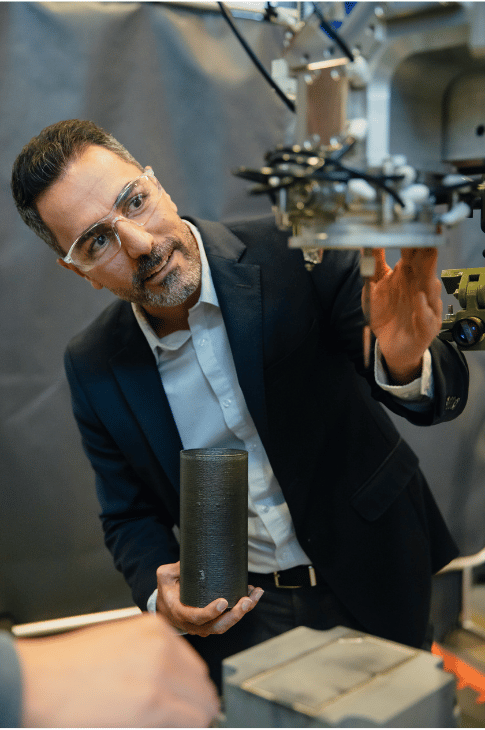
Rajani says the designation creates potential for innovation and international collaboration in dual-use technologies created for both commercial and defence applications. It gives researchers access to expertise and resources across NATO countries while bringing greater attention to the work being done in Alberta and Canada. Students will also be part of that work, with opportunities to gain hands-on lab and equipment experience alongside senior researchers.
“For this hydrogen storage project, one of the first steps we’re going to do is a literature review,” says Rajani. “We’ll dive deeper into what previous researchers have done to make sure we are not duplicating and are focusing on the novelty aspect of our approach."
Hydrogen storage 101
CIRAMM's research goal is to create durable and safe hydrogen storage for powering vehicles and aircraft.
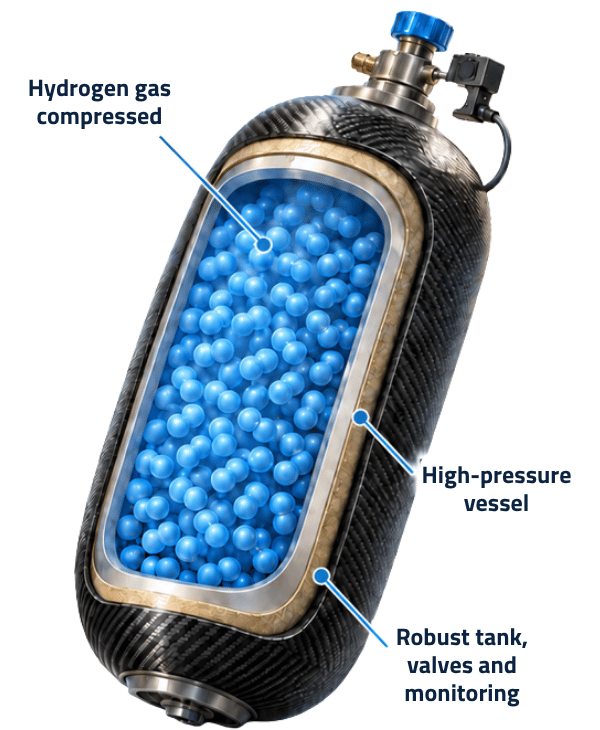
Compressed hydrogen storage
One existing method involves compressing hydrogen in high-pressure tanks — but it is expensive, energy-intensive and poses safety risks.
Potential risks:
- Transportation risks include vibration and impact.
- Extreme temperatures cause additional risk while in transit.
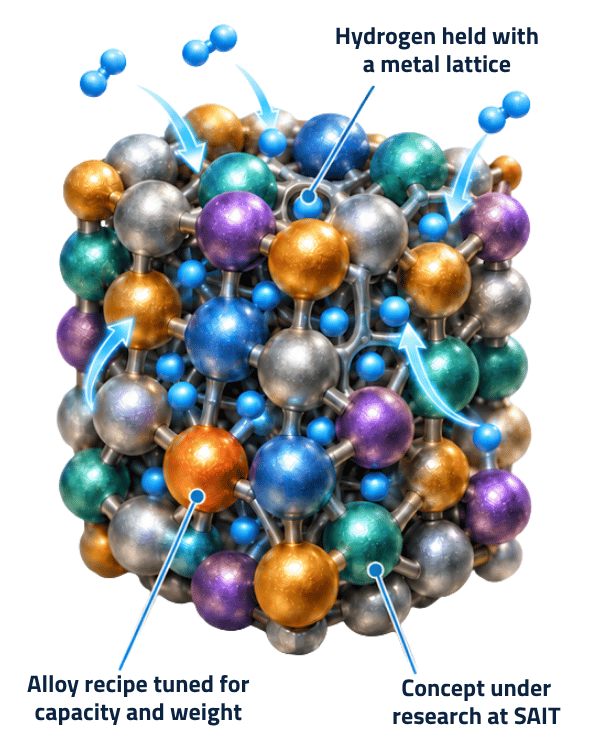
Hydrogen in a high-entropy alloy (HEA)
CIRAMM is researching a novel recipe for an HEA that can safely store hydrogen molecules during transport.
An HEA is made up of at least five metallic elements — such as magnesium and aluminum — in equal measures.
CIRAMM will use advanced manufacturing to create an HEA with a metallic lattice tuned for capacity, weight and efficiency.
Like what you are reading?
Find more stories from past, present and upcoming issues of LINK magazine!
Oki, Âba wathtech, Danit'ada, Tawnshi, Hello.
SAIT is located on the traditional territories of the Niitsitapi (Blackfoot) and the people of Treaty 7 which includes the Siksika, the Piikani, the Kainai, the Tsuut’ina and the Îyârhe Nakoda of Bearspaw, Chiniki and Goodstoney.
We are situated in an area the Blackfoot tribes traditionally called Moh’kinsstis, where the Bow River meets the Elbow River. We now call it the city of Calgary, which is also home to the Métis Nation of Alberta.