
Overview
Third Class Power Engineers operate and oversee larger and more complex power and heating plants, with increased responsibility for high pressure equipment, system performance, and plant safety. This role is commonly found in large industrial facilities, manufacturing plants, refineries, utility plants, and pulp and paper mills, and represents a progression from Fourth Class certification toward higher levels of responsibility.
The Third Class Power Engineering Certificate of Achievement program provides advanced power engineering theory and technical knowledge to support preparation for the Alberta Boilers Safety Association (ABSA) Third Class Power Engineering theory certification exams A1, A2, B1, and B2. For learners pursuing certification, completion of all four courses may also support eligibility for partial credit toward ABSA operating experience requirements, subject to ABSA conditions.
Learn the theory online with instructor support, on a flexible schedule. You’ll study applied mathematics and sciences, boiler and pressure vessel design and operation, fuels and combustion, electrical systems and controls, turbines, compressors, refrigeration systems, water treatment, and plant equipment and systems commonly used in industrial power and heating facilities.
This program is ideal if you:
- hold a valid ABSA Fourth Class Power Engineering Certificate of Competency and want to advance to Third Class
- are preparing to write the ABSA Third Class Power Engineering theory exams A1, A2, B1, and B2
- work in a power or heating plant environment and want to expand your technical knowledge and responsibilities
- are a technical professional seeking Third Class–level power engineering theory knowledge without pursuing certification.
There are no mandatory prerequisites or eligibility requirements to enroll in this program.
To be successful in this program, we recommend you have a minimum 50% in Grade 11 Math, English, Physics. If you haven’t completed these courses, consider taking Academic Upgrading courses first.
Learners will benefit from having Fourth Class–level theory knowledge, or equivalent education or industry experience, before beginning Third Class theory training. Completion of Fourth Class Power Engineering theory courses is recommended.
Note: If your goal is to obtain the Third Class Power Engineering Certificate of Competency with ABSA to work as a Third Class Power Engineer, ABSA requires proof that you hold a valid Fourth Class Power Engineering Certificate of Competency and meet all additional regulatory requirements, including successful completion of the required certification exams and applicable operating experience or steam time.
Upon successful completion of this program, you’ll be able to:
- apply advanced mathematics, physics, thermodynamics, and chemistry principles to power engineering calculations, system analysis, and problem solving
- interpret engineering drawings, codes, and standards relevant to boiler, pressure vessel, piping, and power plant systems
- explain the design, construction, operation, and maintenance considerations of boilers, pressure vessels, pumps, turbines, compressors, and associated auxiliaries
- analyze fuel systems, combustion processes, heat transfer, steam generation, and energy conversion in industrial power and heating plants
- describe electrical theory, power generation, motors, control systems, instrumentation, and automation used in modern power plant operations
- explain operational procedures, safety systems, regulatory requirements, and best practices for safe and efficient plant operation
- demonstrate technical knowledge aligned with ABSA Third Class Power Engineering theory requirements to support certification exam preparation or professional development.
Program outline
To earn this certificate, you must complete the four mandatory courses below. You may complete these courses in any sequence; however, for ABSA certification purposes, we recommend following the sequence: A1, A2, B1, B2. A SAIT Certificate of Achievement is issued only upon successful completion of the four courses at SAIT.
Required courses & electives
How to apply for this certificate
Once you have registered for any course offered in this certificate, you will be automatically eligible to complete the certificate. You will have up to three years to complete this program. You may track your progression by signing in to your Continuing Education student account.
Certifications and professional designations
Upon successful completion of all the required courses in this certificate program, you’ll receive an electronically issued SAIT Certificate of Achievement and transcript.
SAIT will also provide an official result letter for each course completed. These result letters may be submitted with your application to write the ABSA Third Class Part A1, Part A2, Part B1, and Part B2 theory certification exams.
To obtain the Alberta Boilers Safety Association Third Class Certificate of Competency, you must also provide proof of applicable operating experience or steam time in a power or heating plant. ABSA recognizes multiple training and experience pathways. Operating experience credit is granted only upon completion of all four Third Class theory courses. Completion of fewer than four courses does not qualify for credit. If you have completed all four courses and are employed in eligible roles at qualifying power plants, as defined by ABSA, you may be eligible to receive up to six months of credit toward the 12-month operating experience requirement.
Power Engineering certification requirements and transfer provisions vary by province and territory across Canada. Check with the regulatory authority where you plan to work:
- Planning to work in Alberta? Contact ABSA.
- Planning to work elsewhere in Canada? Contact the local boiler branch in that jurisdiction.
Cost
This program consists of four mandatory courses with varying fees. Please review the individual course pages for this certificate program to determine costs and to learn more about additional learning materials, including textbooks.
Financial support
Financial opportunities are available to help pay for your course fees. Learn more about how to reduce your education or training costs with available awards, bursaries, loans and grants including the Canada Alberta Productivity Grant.
Careers and opportunities
With this program and all other ABSA certification requirements met, you’ll be prepared to pursue opportunities as a Third Class Power Engineer. The program also supports operational, maintenance, facilities, technical, and supervisory roles that use Third Class–level power engineering knowledge.
Related certificates you may like
- Certification type
-
 Certificate of Achievement
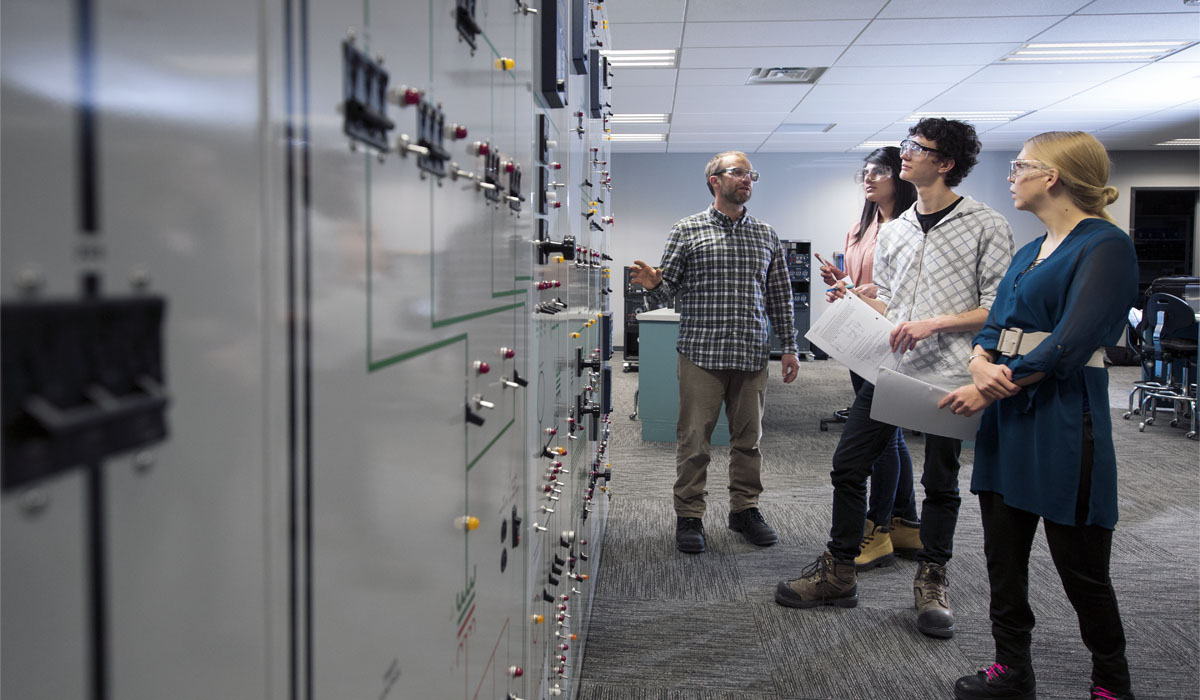
Advance to First Class power engineering with theory aligned to ABSA A1–B4 exams and complex plant systems.
- Certification type
-
Certificate of Achievement
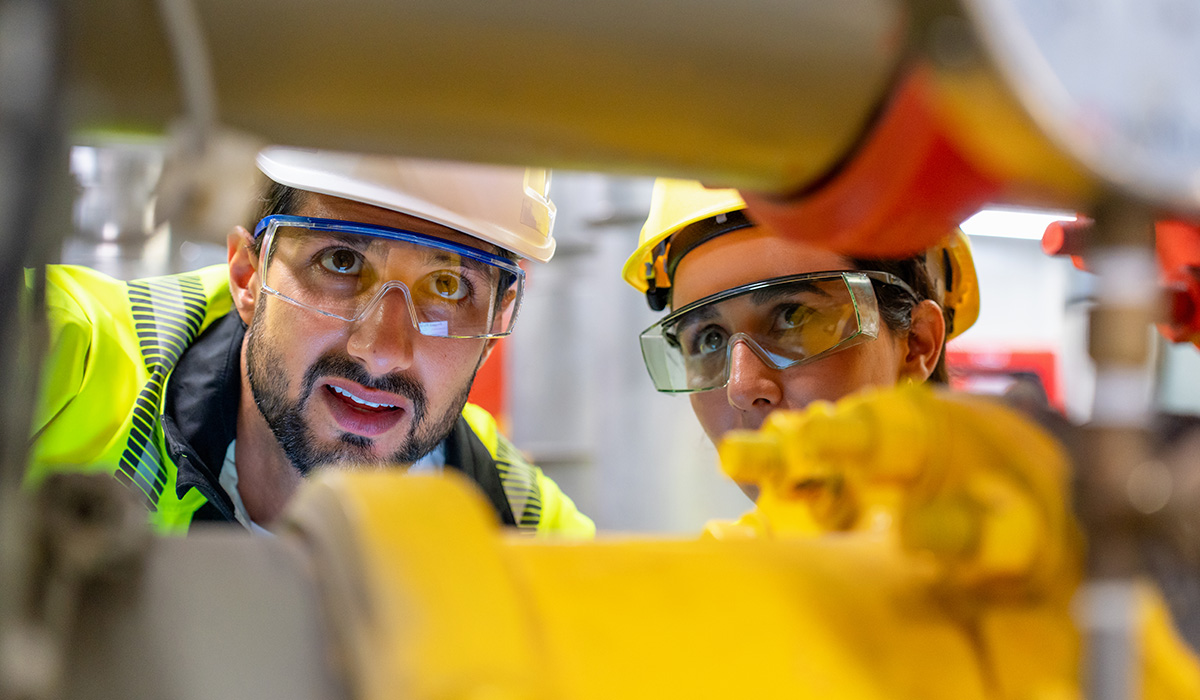
Advance to Second Class power engineering with theory aligned to ABSA A1–B3 exams and complex plant systems.
- Certification type
-
Certificate of Achievement
Prepare for ABSA Fourth Class Power Engineer Part A & B theory certification exams through online high-pressure boiler systems training with flexible study.

Stories and news
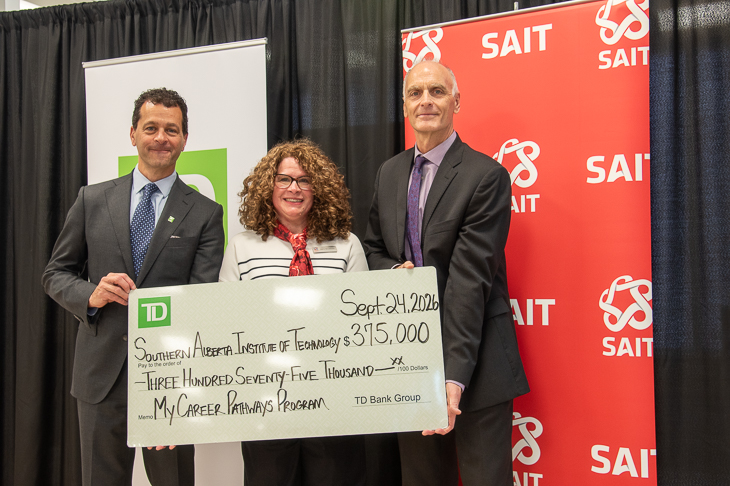
TD investment strengthens skills development and career exploration at SAIT
MEDIA RELEASE - The Southern Alberta Institute of Technology (SAIT) has received a second $375,000 commitment, over three years, from TD Bank Group (TD). This renewed investment aims to support My Career Pathways.

New SAIT and Mastercard partnership targets cybersecurity gaps facing Canada’s small businesses and non-profits
MEDIA RELEASE - SAIT and Mastercard collaborate to expand access to cybersecurity learning and help organizations in Western Canada strengthen their digital resilience.

Oki, Âba wathtech, Danit'ada, Tawnshi, Hello.
SAIT is located on the traditional territories of the Niitsitapi (Blackfoot) and the people of Treaty 7 which includes the Siksika, the Piikani, the Kainai, the Tsuut’ina and the Îyârhe Nakoda of Bearspaw, Chiniki and Goodstoney.
We are situated in an area the Blackfoot tribes traditionally called Moh’kinsstis, where the Bow River meets the Elbow River. We now call it the city of Calgary, which is also home to the Métis Nation of Alberta.