Overview
Residential buildings account for a significant share of energy use and carbon emissions. Improving their performance through deep energy retrofits requires professionals who can evaluate the home as a system and coordinate decisions from initial assessment through project delivery.
To support this end-to-end approach, this certificate of completion program explores residential building science, retrofit strategies, home assessment, detailed planning, and project execution. You’ll examine indoor environmental quality, operational and embodied carbon, homeowner priorities, costs and savings, climate resilience, home electrification, EnerGuide reports, renewable energy potential, building envelope and home-system upgrades, quality control, commissioning, and handover.
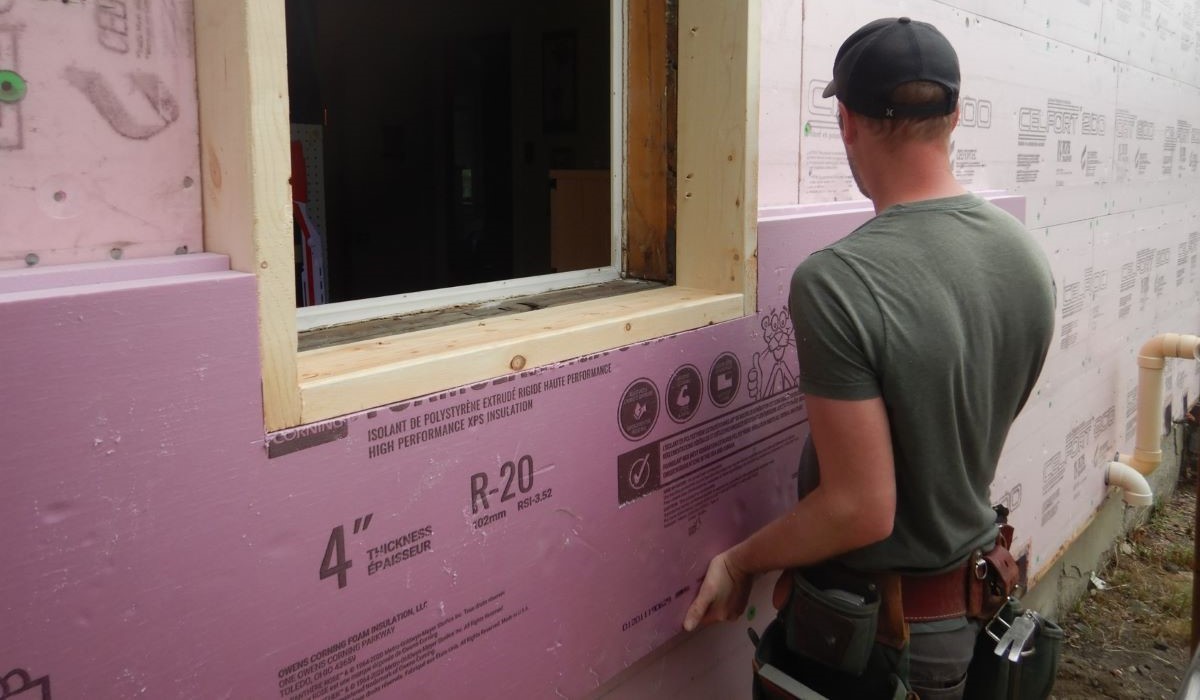
Four online courses combine self-directed learning with instructor-led virtual sessions. A final in-person course uses building assembly mock-ups and hands-on labs to reinforce installation detailing, air sealing, sequencing, and quality-assurance practices in realistic residential retrofit scenarios.
By completion, you’ll be prepared to evaluate retrofit opportunities, develop coordinated plans, and support project delivery. You’ll strengthen your ability to balance building performance, costs, technical requirements, and homeowner goals from early assessment through implementation and handover.
This program is ideal if you:
- work in residential construction, renovation, design, energy advising, or a related field and want to build deep energy retrofit expertise
- are preparing to lead or coordinate residential retrofit projects
- want practical experience in home assessment, planning, quality control, and project execution
- aspire to roles related to residential retrofit planning, site coordination, energy advising, or home inspection.
This certificate program is partly funded by the Government of Canada through the Sectoral Workforce Solutions Program in partnership with Canadian Colleges for a Resilient Recovery (C2R2).
Meet our subject matter expert and instructor: Benjamin Hildebrandt
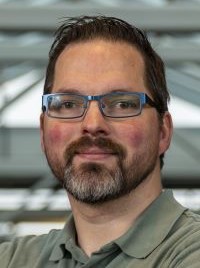 Ben Hildebrandt brings over a decade of experience in building science and sustainable construction. A graduate of SAIT’s Architectural Technologies program, he has worked extensively as a building envelope consultant on various residential and commercial remediation and new construction projects across Alberta.
At SAIT’s Green Building Technology Access Centre, Benjamin leads applied building science research and has led the development of the High Performance Residential Design and Construction and Residential Deep Energy Retrofit programs. His teaching emphasizes real-world learning, using practical examples and industry insights to prepare students for success in high-performance building and retrofit practices.
To be successful in this program, we recommend that you have:
- a high school diploma, post-secondary technical diploma or degree, skilled trades training, or industry certification; and
- current or previous experience in residential construction.
Experience or education in architecture, engineering or related technical fields is also beneficial.
Upon successful completion of this program, you'll be able to:
- develop deep energy retrofit strategies by integrating building science principles, house-as-a-system considerations, and climate resilience factors to meet net-zero emission goals and homeowner objectives
- conduct evaluations of existing residential buildings to determine deep energy retrofit feasibility, analyzing homeowner motivations, building performance potential, carbon implications, and cost-benefit relationships
- create integrated retrofit plans that coordinate building envelope upgrades (walls, foundations, roofs), mechanical and electrical system improvements, and renewable energy integration while balancing performance, cost optimization, and homeowner priorities
- demonstrate proficiency in deep energy retrofit principles through hands-on learning experiences, case study analysis, and practical application of assessment tools, construction techniques, and performance evaluation.
Introducing SAIT's Residential Deep Energy Retrofit Program
Program outline
To earn this certificate, you must complete the five mandatory courses listed. You may register for individual courses in any order; however, following the recommended course sequence will help you build knowledge and skills progressively.
Required courses & electives
How to apply for this certificate
Once you have registered for any course offered in this certificate, you will be automatically eligible to complete the certificate. You will have up to three years to complete this program. You may track your progression by signing in to your Continuing Education student account.
Certifications and professional designations
Upon successful completion of all the required courses in this certificate program, you’ll receive an electronically issued SAIT Certificate of Completion and transcript. For each SAIT Micro-credential earned, you'll also receive a shareable digital badge.
Costs
This program consists of five mandatory courses with varying fees. Please review the individual course pages for this certificate to determine costs and to learn more about additional learning materials, including textbooks.
Financial support
Financial opportunities are available to help pay for your course fees. Learn more about how to reduce your education or training costs with available awards, bursaries, loans and grants, including the Canada Alberta Productivity Grant.
Careers and opportunities
With the knowledge and skills gained in this program, you'll be positioned to explore opportunities related to residential building performance, retrofit planning, and deep energy retrofits.
Related certificates you may like
- Certification type
-
 Certificate of Completion
The Sustainable Mass Timber Certificate equips you with practical skills in mass timber, opening doors to one of Canada’s fastest-growing sectors.

- Certification type
-
Certificate of Achievement
Build expertise in construction estimating and preparation through cost estimation, blueprint reading, process flow diagrams, and best practices.

- Certification type
-
Certificate of Achievement
Build foundational construction management skills in planning, safety, contracts, codes, and supervision for site roles.

Stories and news
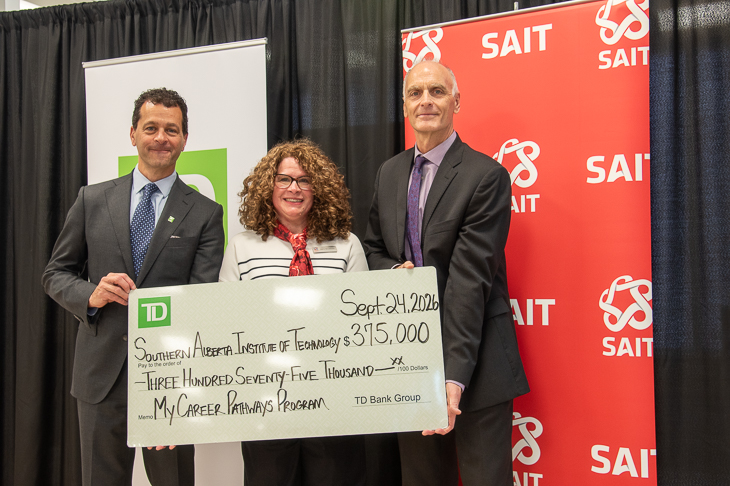
TD investment strengthens skills development and career exploration at SAIT
MEDIA RELEASE - The Southern Alberta Institute of Technology (SAIT) has received a second $375,000 commitment, over three years, from TD Bank Group (TD). This renewed investment aims to support My Career Pathways.

New SAIT and Mastercard partnership targets cybersecurity gaps facing Canada’s small businesses and non-profits
MEDIA RELEASE - SAIT and Mastercard collaborate to expand access to cybersecurity learning and help organizations in Western Canada strengthen their digital resilience.

Oki, Âba wathtech, Danit'ada, Tawnshi, Hello.
SAIT is located on the traditional territories of the Niitsitapi (Blackfoot) and the people of Treaty 7 which includes the Siksika, the Piikani, the Kainai, the Tsuut’ina and the Îyârhe Nakoda of Bearspaw, Chiniki and Goodstoney.
We are situated in an area the Blackfoot tribes traditionally called Moh’kinsstis, where the Bow River meets the Elbow River. We now call it the city of Calgary, which is also home to the Métis Nation of Alberta.