ADDIE is a flexible framework that helps guide the course design process from start to finish. It's widely used in education and training to structure everything from single lessons to full programs.
ADDIE stands for:
- Analyze – Understand the learning problem and audience.
- Design – Plan the learning experience.
- Development – Build content and materials.
- Implementation – Deliver the course and support learners.
- Evaluation – Review and improve the course.
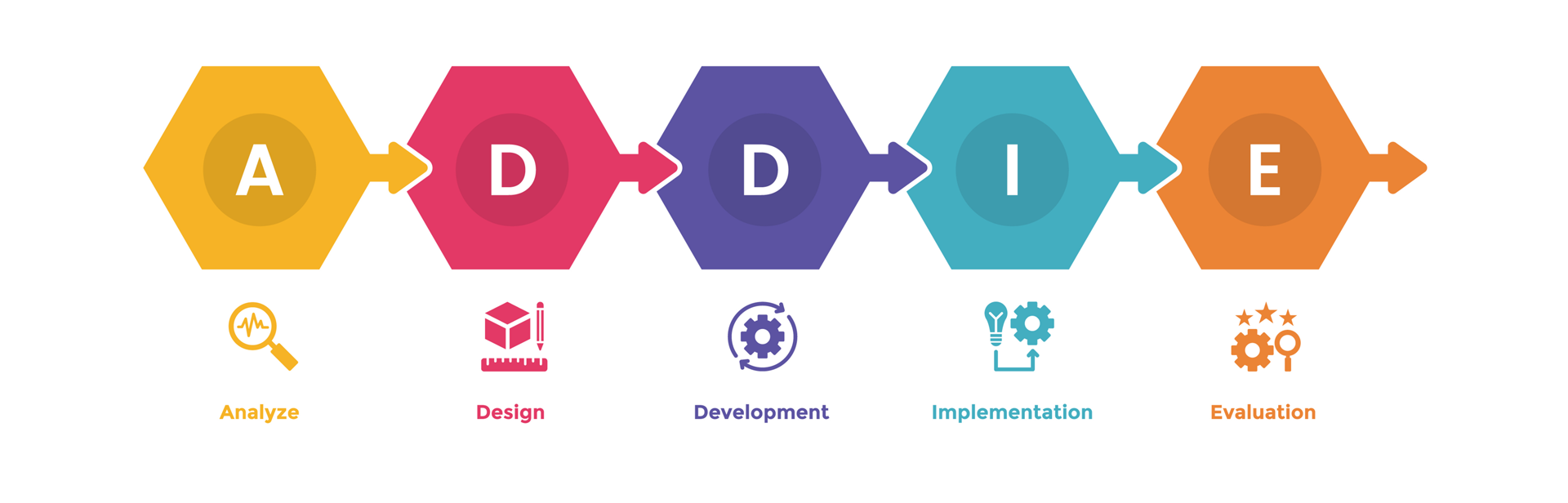
You don’t need to follow it strictly in order. ADDIE works best as a flexible guide, not a rigid checklist. You may move back and forth between stages depending on the project scope, feedback, or available resources.
Analyze
Start by understanding the problem you're trying to solve and who your learners are. What’s the problem or need?
- Who are the learners?
- What are the learning goals?
- Are there gaps in skills, knowledge, or attitudes?
- What are the constraints (time, tools, platform, support)?
Use this stage to gather context. Talk to other instructors, students, academic chairs, and industry. Gather and review existing materials, past courses, and institutional standards. Consider program-level expectations, transfer pathways, and accreditation requirements. The goal is to define what success looks like and what’s getting in the way.
Design
Map out what learners need to achieve and how the course will help them get there.
- Write or refine learning outcomes and outcomes using Bloom’s verbs.
- Decide how learners will show what they’ve learned.
- Plan assessments that align with outcomes.
- Organize course topics into modules or weeks.
- Choose instructional methods (lecture, group work, case studies, etc.).
- Select tools and technologies that support learning.
Think of this as your blueprint. Every outcome must be connected to at least one assessment and be supported by relevant learning activities. Keep it learner-centred and inclusive from the start.
Development
Turn your design into real content, materials and course components.
- Build or source readings, videos, presentations, and activities.
- Develop assessments and rubrics.
- Draft instructions, overviews, and discussion prompts.
- Develop content into Brightspace.
- Check for accessibility and consistency across materials.
This stage is where ideas become tangible. Keep it iterative, which means working through pieces as you go. Build in plain language, clear navigation, and flexible formats to support diverse learners.
Implementation
Roll out the course and support learners during delivery.
- Orient learners to the structure and expectations.
- Monitor early engagement and troubleshoot issues.
- Support students with learning guides and information.
Implementation is about active facilitation in the classroom. Stay involved, track participation, and be responsive to learner questions. Small adjustments early on can prevent confusion or disengagement later.
Evaluation
Review what worked, what didn’t, and make changes to improve future versions.
- Collect feedback through surveys, like SFQs, reflection prompts, or informal check-ins.
- Review grades, participation data, and drop-off points.
- Debrief with other instructors or your students.
- Identify gaps, unnecessary content, or areas for streamlining.
Evaluation isn’t just about the end-of-term survey. You can evaluate during any phase of the process and it’s especially important in development and delivery. Build in feedback loops to improve content, delivery methods, and learner supports. Keep notes for future revisions or handoff to other instructors.
Final thoughts
ADDIE gives you a structured way to think through course planning and development. Whether you're starting from scratch or improving an existing course, the framework helps you stay aligned with learner needs, teaching goals, and institutional standards.
How can we help?
Every teaching context is different. Let's start with a conversation about your goals, your learners, and your ideas.

Oki, Âba wathtech, Danit'ada, Tawnshi, Hello.
SAIT is located on the traditional territories of the Niitsitapi (Blackfoot) and the people of Treaty 7 which includes the Siksika, the Piikani, the Kainai, the Tsuut’ina and the Îyârhe Nakoda of Bearspaw, Chiniki and Goodstoney.
We are situated in an area the Blackfoot tribes traditionally called Moh’kinsstis, where the Bow River meets the Elbow River. We now call it the city of Calgary, which is also home to the Métis Nation of Alberta.