How SAIT grad Olivia Zamrykut prompted the creation of SAIT’s new Environmental DNA (eDNA) lab — and then mentored the students who followed in her footsteps.
Feature photo by Olivia Zamrykut
Illustrations by Danielle Erickson
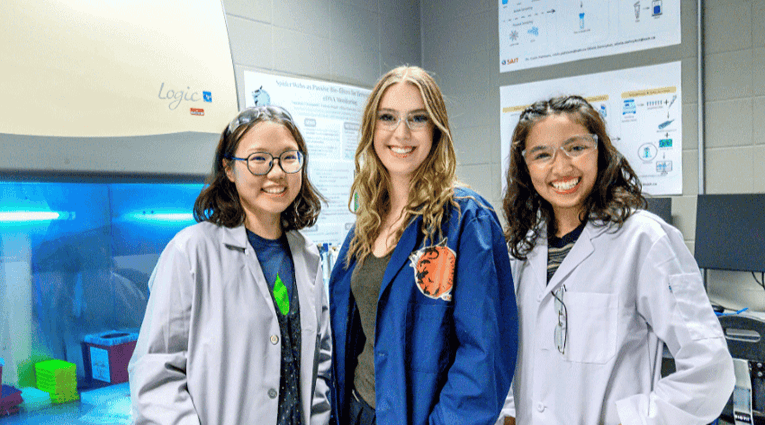
Modern wildlife monitoring technology helps protect endangered species and contain invasive ones. But it’s also expensive, time-consuming, and relies on being at the right place at the right time. That’s why students in the MacPhail School of Energy’s Environmental Technology (EVT) diploma program are turning to the institution’s Environmental DNA (eDNA) Lab to identify alternatives.
It started when Olivia Zamrykut (EVT '25) read a study about collecting eDNA from snow tracks in the Arctic. Curious, Zamrykut and her research partner Kendra Hogg (EVT '25) dedicated their capstone project to collecting eDNA from animal snow tracks in Kananaskis.
To support their project, SAIT researcher and instructor Colin Pattison, PhD, worked with Zamrykut to establish the eDNA lab.
“Because we were able to make this space, I was able to ID the species we were collecting in the field and then compare our results to the eDNA hits,” Zamrykut says.
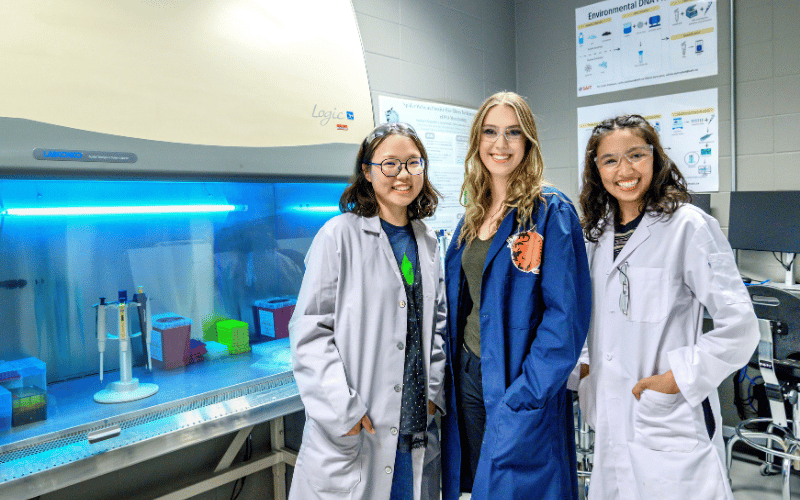
Pictured (left to right): Tzu-Yun Hsueh (EVT '26), Olivia Zamrykut (EVT '25) and Nuttakan Chimpanid (EVT '26)
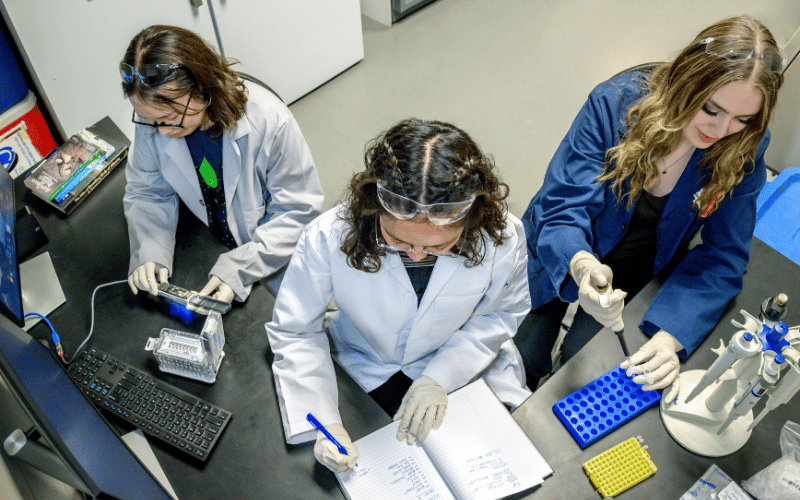
The lab purchased a nanosequencer, a device the size of a granola bar that reads DNA one molecule at a time, helping Zamrykut and Hogg identify cougar, deer, and rodent eDNA. “We came across a kill site,” says Zamrykut. “There was a stop in the tracks and wing imprints in the snow. It turns out it was an owl and a mouse.”
After graduation, Zamrykut continued to work alongside Pattison as the lab’s first research assistant. She also supported Nuttakan Chimpanid (EVT '26) and Tzu-Yun Hsueh (EVT '26) as they worked on their own Innovative Student Project Fund (ISPF)-funded capstone project to find out if spider webs can collect environmental DNA to help monitor terrestrial wildlife.
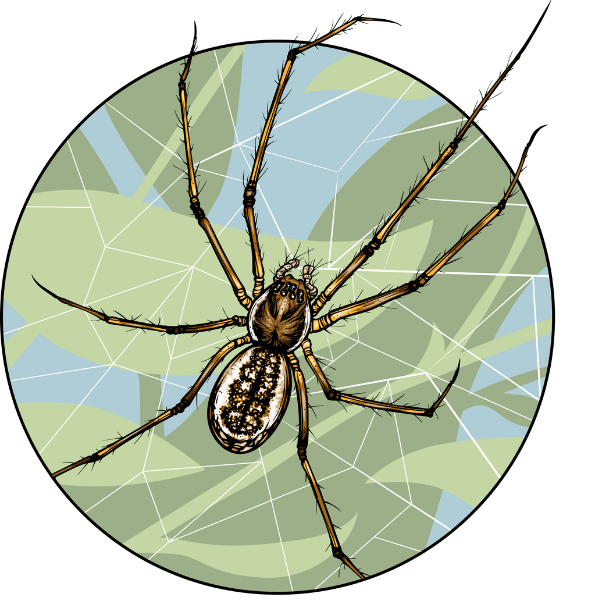
There are an estimated 628 spider species in Alberta — more than the number of bird species found across the province — including the Filmy Dome spider (shown here) and the Nordmann's orbweaver. Spiders build webs to capture their prey but capstone students Nuttakan Chimpanid and Tzu-Yun Hsueh wanted to learn whether they also capture eDNA from mammals passing by.
“Camera tracking is good, but it takes a lot of time,” says Chimpanid. “If you use the spider webs, you can just take the sample to the lab and then you’ve got weeks or even months of data.”
Their work required targeted analysis, so Zamrykut helped acquire a PCR amplifier for the lab. “It amplifies the target species’ DNA by making millions of copies,” she explains. “That makes weak DNA signals for specific animals much more likely to be read during sequencing and detected in the dataset.”
It worked well. Chimpanid and Hsueh confirmed eDNA from moose, wolves, elk, lynx, voles — and wild boars, an invasive species.
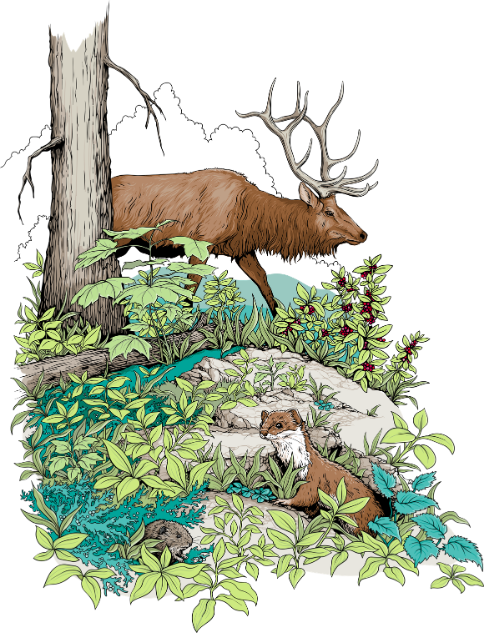
DNA was collected from webs found in microhabitats like:
- bark crevices, rotting logs and among rocks and crevices along waterways
- Closer to the ground, these webs can help capture eDNA from smaller animals like ermine, voles and shrews.
- shrubs like creeping juniper, wolf willow and buffaloberry
- These webs are more likely to intercept DNA from larger wildlife like moose, wolves, elk and lynx.
Now Chimpanid and Hsueh have graduated and Zamrykut is leaving for a five-month Arctic Biology program in Svalbard, Norway. But with four or five active projects currently running in the eDNA lab, there's never a shortage of curious students to carry the work forward.
"If you have anything you want to know, that you want to try — you just have to give it a try," says Hsueh. "If you never try, you never know."
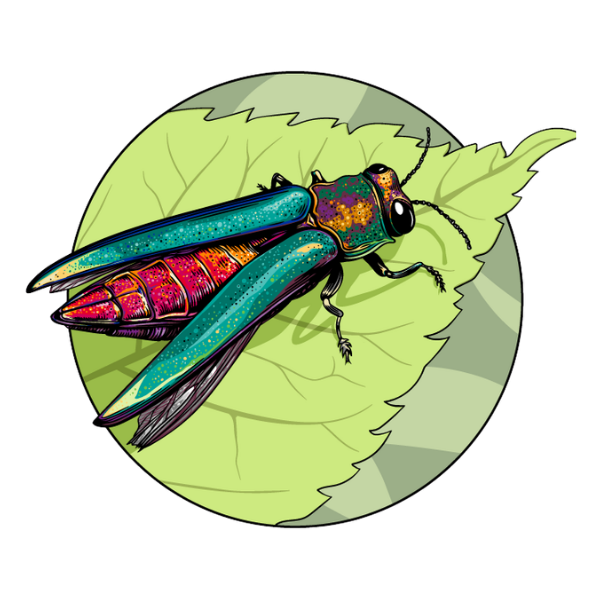
Back in the lab, Chimpanid and Hsueh analyzed their spider web samples and found eDNA from wild boar.
This suggests spider webs could be used to detect other invasive species and insects like the Emerald Ash Borer (shown here) or invasive plants.
Like what you are reading?
Find more stories from past, present and upcoming issues of LINK magazine!
Oki, Âba wathtech, Danit'ada, Tawnshi, Hello.
SAIT is located on the traditional territories of the Niitsitapi (Blackfoot) and the people of Treaty 7 which includes the Siksika, the Piikani, the Kainai, the Tsuut’ina and the Îyârhe Nakoda of Bearspaw, Chiniki and Goodstoney.
We are situated in an area the Blackfoot tribes traditionally called Moh’kinsstis, where the Bow River meets the Elbow River. We now call it the city of Calgary, which is also home to the Métis Nation of Alberta.