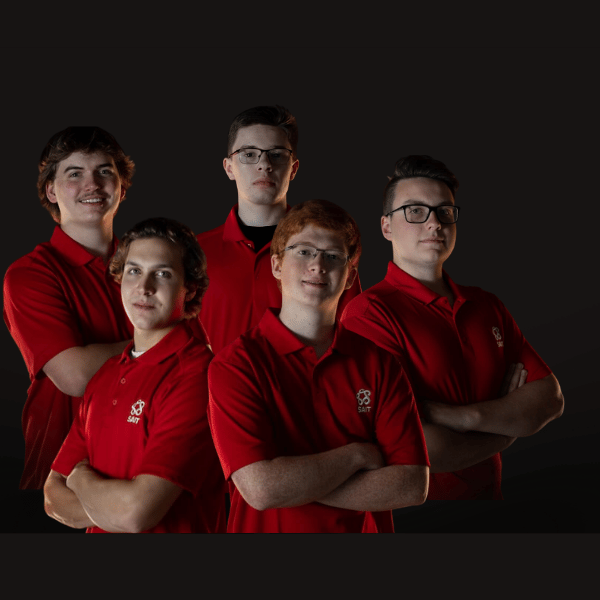
As five SAIT competitors train to attend WorldSkills 2026 in Shanghai this September, LINK looks back to 2009 — the year these “Olympics of the skilled professions” came to Calgary and cemented a culture of support across campus that continues today.
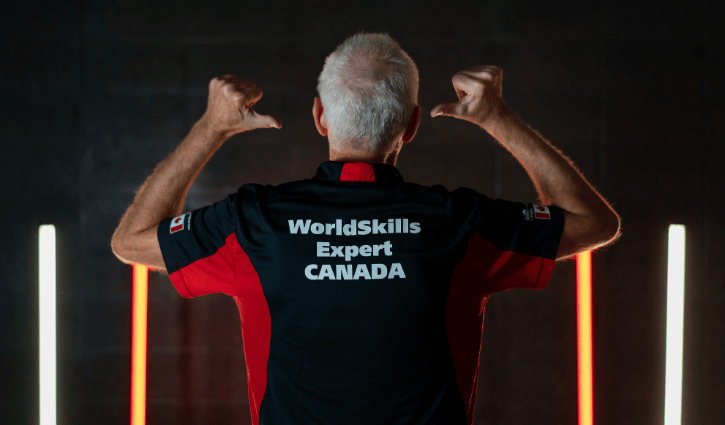
Daniel Reid (Information Technology ’09) spent six intense months training to compete in the Information Network Cabling category at WorldSkills 2009, but he still wasn’t ready for what he saw when he arrived at Stampede Park.
The grounds had been transformed into a global competition venue filled with massive tents, millions of dollars of equipment and more than 850 young competitors from 46 countries — the largest competitive event Calgary had seen since hosting the 1988 Winter Olympics.
“I honestly had no idea of the scale of the competition — how many people would be there and the sheer number of competition categories.”
What is WorldSkills?
Often described as the Olympics of the trades, WorldSkills is held every two years. It brings together national teams of skilled apprentices under the age of 25 who have risen through competitions at the regional, provincial and national levels.
It also draws thousands of spectators to experience the excitement of international competitors at the top of their game while raising awareness of skills excellence and inspiring others to pursue careers in the trades and technologies.
It was a heady time for Reid and his six fellow SAIT apprentices — still the largest cohort of competitors from this institute to step onto the WorldSkills stage.
It was also exciting for Calgary, which became the first WorldSkills host city to engage the general public by offering Try-a-Skill tents, interactive educational activities and a media relations campaign launched 100 days before the event’s Opening Ceremonies.
“The SAIT Seven, as we were called, were everywhere in the months leading up to WorldSkills — on TV, in newspapers and magazines, and even on a wagon during the Stampede Parade with Mike Holmes, the WorldSkills honourary spokesperson and that year’s parade marshal,” Reid says.
Being surrounded by more than 150,000 parade attendees in early July was good practice for what would happen just two months later, when thousands of school groups and spectators would make their way past Reid’s WorldSkills competition space on the second floor of the Grandstand (now known as GMC Stadium).
“During the earliest part of my career, I was learning to deal with pressure in a way not very many people get to experience,” says Reid. He now works as a foreman with multi-trade subcontractor Plan Group and project manages the company’s work across Alberta.
Similar memories of competition — and of learning to deal with its pressures — also stand out for Menno Vanderlist (Bachelor of Applied Technical Information Systems ’08, Network Engineering Technology ’05).
He was a member of Team Canada at WorldSkills in Helsinki, Finland in 2005, bringing home both a silver medal and the Best of Nation award for the highest marks of any competitor.
Setting a world stage for Skills
His experience perfectly positioned Vanderlist to serve on the WorldSkills Board of Directors tasked with bringing the 2009 competition to Calgary, though it didn’t really feel like it at the time.
“I remember being a 21-year-old walking into the big boardroom in Heritage Hall for our first board meeting and seeing a room filled with well-dressed, well-spoken and well-educated people who I had never really been exposed to before,” he says.
But Vanderlist’s participation was vital: he represented the competitors and shared first-hand insights on the WorldSkills experience.
“My role was to make it all real,” says Vanderlist, who is now director of solutions engineering with Wiz, a cloud security platform based in Tel Aviv, Israel.
“What I didn’t know at the time was how those conversations would prepare me for what I do today. I know for a fact that the experiences I’ve had with WorldSkills are the reason why I'm successful in my career.”
His position on the Board gave Vanderlist a deeper perspective into innovative ways the Calgary event changed all subsequent WorldSkills: introducing a Competitor’s Village, inviting school groups and the general public to attend, and donating an estimated $16 million in equipment and tools used during the competition to Alberta schools and post-secondaries after the Closing Ceremonies.
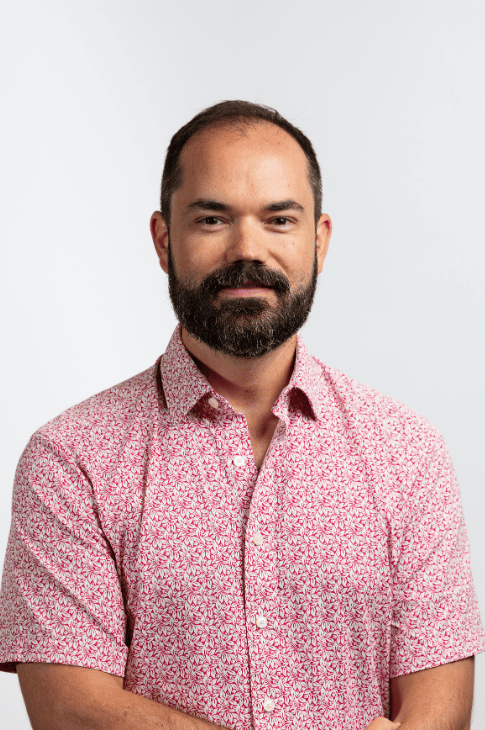
Bachelor of Applied Technical Information Systems '08
Remember when
SAIT delayed the start of its 2009/10 academic year by two weeks so WorldSkills could take over campus. It became the first-ever WorldSkills Competitor's Village, offering hotel-style accommodation in SAIT's Residences as well as access to Campus Centre and its swimming pool, gymnasium and fitness centre, as well as the Reg Erhardt Library, the Bookstore and cafeterias.
“In the conversations I had, I was hearing that SAIT and its partners had delivered a competition at a calibre I don't think WorldSkills had seen before: the exposure, the contributions to the community and the revenue generation.”
It’s a legacy Jim Szautner says SAIT would continue to build.
A visible show of support
In his current role as Dean of Construction, Szautner understands how the Institute’s support of the Calgary competition — and its competitors — sparked a whole new culture at SAIT.
“WorldSkills not only put us on the map as a top performer globally, but its legacy has lived on through the SAIT competitors, trainers and experts who have followed," he says.
Szautner had only been with the Institute for about a month before the 2009 event but found himself volunteering at one of 29 Skills Ambassador stations, where industry experts provided information on aspects of specific trades or technologies being showcased.
Over the four days of competition, he interacted with people from all over the world and thousands upon thousands of students, teachers and parents from across the province.
He says he instantly fell in love with the event, its significance and its impact. So, not long after the tents were taken down and the equipment distributed, Szautner set out to make SAIT’s connections with Skills even more visible.
He started digging out Skills banners that had been awarded to medal recipients from past competitions at the regional, provincial, national and WorldSkills levels. He found them rolled up in offices and hidden away in filing cabinets, and gradually these banners were hung proudly in the atrium of the Thomas Riley building.
Over the years, a dozen banners quickly became a full row, then two. Before Szautner knew it, banners were extending to the Clayton Carroll Automotive Centre and almost everywhere across campus.
“There is no other post-secondary in the country that even comes close to producing the number of WorldSkills competitors as SAIT,” Szautner says.
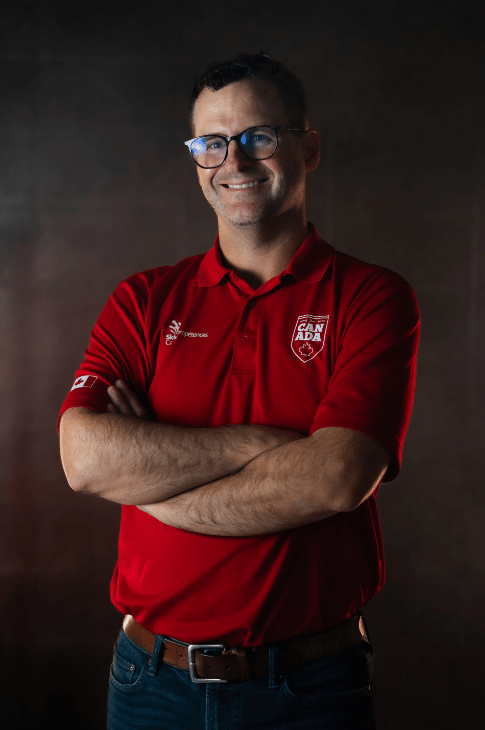
Dean of MacPhail School of Energy and School of Construction
A look back at WorldSkills 2009
Live vicariously through some of the photos from WorldSkills 2009 in Calgary, Alta. These images and more are found on WorldSkills Calgary, 2009 Flickr albums.
And achieving that is no small feat. Success on the world stage is about technical skill, of course, but it’s also about mental toughness, the ability to deal with stress and the capacity to adapt to being in a different environment.
“If you’re a cabinetmaker, you get better at building cabinets by breaking down each component and working on that until it’s so innate you don’t even have to think about it anymore,” Szautner says.
That’s exactly the approach that Harley Breadner (Automotive Service Technician ’11), an instructor at SAIT who teaches automotive service, is using right now as WorldSkills trainer for Carter Kokot (Automotive Service Technician ’24).
More than medals
Much like a skilled athlete, Kokot is following a detailed training plan that maps out every moment leading up to September’s competition in Shanghai.
The plan is being shaped both by Breadner’s experience as a four-time Skills Canada National Competition coach and by WorldSkills Expert Nathan Banke, a volunteer living in Quebec who represents Canada and shares his knowledge and expertise with competitors.
“The three of us really work as a group,” Breadner says. “Carter and I are meeting with Nathan regularly online, and Carter and I talk daily and meet in person at least weekly in the evening for training sessions.”
And there’s one more member of the training team. Kokot is still working full-time with the support of his employer, Lexus of Royal Oak.
“It really does take a village, and his employer is like another training partner — they’ve granted Carter time off, helped fund a practice trip to France and are giving him challenging work that helps him grow,” Breadner says.
Training involves long days and a ton of material to cover — foundational knowledge, strategy-based diagnostics, and practicing for an international competition that features different languages, cultures and time zones.
Protecting his competitor’s love for his trade is always top of mind for Breadner.
“Skills is a whirlwind of emotion and there’s nothing like seeing a competitor be successful,” he says. “But at the end of the day, no matter what happens, I want to make sure Carter doesn’t trade his passion for a medal.”
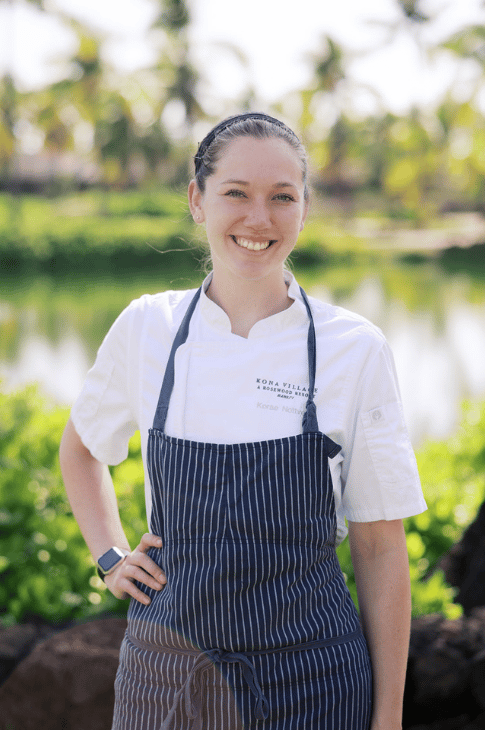
That passion is something that is definitely alive and well in 2022 WorldSkills gold medalist Korae Nottveit (Professional Cooking ’19).
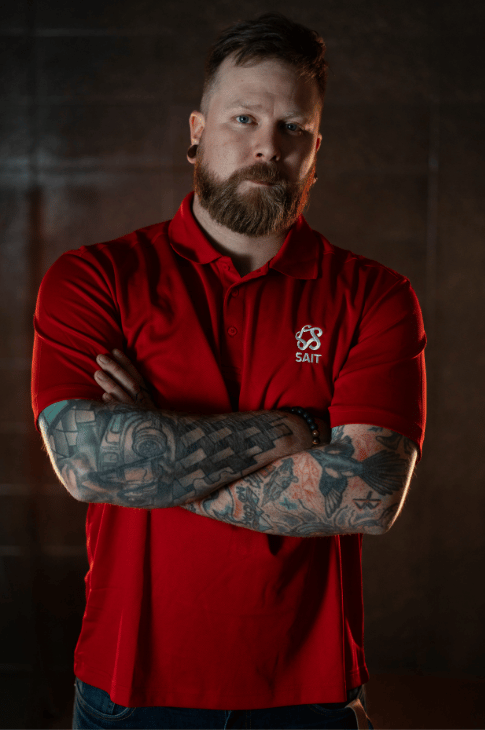
Automotive Service Technician '11
SAIT Instructor and WorldSkills Trainer
Beyond the competition floor
Nottveit made history in Lucerne, Switzerland when she took top marks in Cooking — the first Albertan and only the second Canadian to ever win gold in this category.
“They announce medalists working from bronze to gold, so by the time they called my name, I was already out of my seat,” Nottveit says. “Winning WorldSkills was my goal for three years and it was such a pinnacle to be there in Switzerland with my trainer, my mom and dad, and a whole network of support around me.”
That backing, she says, is the reason she won.
“If I ever got discouraged, I’d look around me and see how many people were putting time and energy into supporting me. Failing wasn’t an option.”
Sticking to it, even when things were hard, definitely paid off. As she trained to hone her practical skills, Nottveit says, she was also gaining in confidence, growing in determination, and establishing a strong work ethic and killer time management skills.
Nottveit says she wouldn’t be where she is today — executive sous chef at Kona Village, a Rosewood Resort on the Big Island in Hawaii — without her experience with Skills.
“Being in competitions really pushed me to go as far as I could and gave me opportunities I would never have had otherwise,” she says.
Her advice for this year’s SAIT competitors — currently in the middle of their training — who are about to join the elite group of people who have competed at this international level of excellence?
“Give it all you’ve got, but most of all, make sure you have fun,” Nottveit says.
Professional Cooking '19
“Getting this far is no small achievement. You’ve already been through so much, and it might not seem like a lot of fun right now. But you’ll look back on this as a really good memory.
“The friendships you’re about to make, the mentors you’ll take with you and the experience you’ll have will make it all worthwhile.”
In Shanghai this September, SAIT’s newest competitors will add their names — and perhaps additional WorldSkills banners — to a legacy stretching far beyond the competition floor.
SAIT’s WorldSkills competitors from the past to the present
As the countdown to WorldSkills 2026 continues, here is a list of SAIT competitors who have represented Canada the this prestigious global event.
2001: Seoul, South Korea
| Darryl Lanz (SMP '04) | Sheet Metal Work |
2003: St. Gallen, Switzerland
| Mark Chupik (PBP '04) | Plumbing | Diploma |
| Nathanial Ouelette (MMP '03) | Automobile Technology | Diploma |
| Kirk Quast (MAP '03) | CNC Milling |
2005: Helsinki, Finland
| Calvin Ages | Cabinetmaking | Medallion for Excellence |
| Thomas Sorensen (BLP '03) | Bricklaying | |
| Menno Vanderlist (BAIS '08, NNT '05) | IT/PC Network Support | Silver and Best of Nation Award |
2007: Shzuoka, Japan
| Travis Dunne (AELP '07) | Industrial Control | |
| Carl Stretch (AMAP '07) | CNC Milling | Medallion for Excellence |
2009: Calgary, Canada
| Matthew Chadder (BAIS '10, NNT '08) | IT/PC Network Support | Medallion for Excellence |
| Brad Chyz (ASMP '11) | Sheet Metal Technology | |
| Devon DeBoer (AABF '10, AABR '08) | Autobody Repair | |
| Steven Dingwall (AELP '09, PELP '05) | Industrial Control | |
| Daniel Green | Car Painting | |
| Daniel Reid (IT '09) | Information Network Cabling | |
| Tiffany Vandermey (APDP '09) | Painting and Decorating |
2011: London, United Kingdom
| Luke Moore (AMAP '10) | CNC Milling | |
| Nigel Renschler (POW3 '15, PWR4 '13) | Autobody Repair | Medallion for Excellence |
| Tim Twa (AELP '09, PELP '07) | Electrical Installations | Medallion for Excellence |
2013: Leipzig, Germany
| Jordy Bartman (AABP '14) | Autobody Repair | |
| Marissa Halter (GCPT '13) | Print Media Technology | |
| Zachary Hartle (AELP '11) | Industrial Control | Medallion for Excellence |
| Nicolas Kitt (AWEP '13) | Welding | Medallion for Excellence |
2015: São Paulo, Brazil
| Justin Dambitis | Autobody Repair | |
| Rylan Dekok (ACAP '14) | Cabinetmaking | |
| Peter Lauser (METN '21, AMWP '15, MWTN '13) | Industrial Mechanics Millwright | |
| Brandon Liang (AAST '17) | Automobile Technology | Medallion for Excellence |
2017: Abu Dhabi, United Arab Emirates
| Scott Dombowsky-Oneski | Cabinetmaking | Medallion for Excellence |
| Victoria Hislop (PCK '16) | Cooking | Medallion for Excellence |
| Deanne Reynolds | Industrial Mechanic Millwright | Medallion for Excellence |
| Aledandre Sidorchuk (AMT '16) | Aircraft Maintenance | Medallion for Excellence |
2019: Kazan, Russia
| Taylor Desjardins (ACAP '21) | Cabinetmaking | Medallion for Excellence |
2022: Various locations
| Jason Kent (IIET '22, META '20, METD '20) and Matthew Henderson (META '23) |
Mechatronics | |
| Korae Nottveit (PCK '19) | Cooking | Gold |
| Dylan Topolnisky (AELP '20) | Industrial Cooking |
2024: Lyon, France
| Noah Harding (APBP '26) | Plumbing and Heating | |
| Tyler Cherkowski (RFP '03) | Refrigeration & Air Conditioning |
2026: Shanghai, China
Meet this year's competitors| Benjamin (Ben) Jamison (AMT '23) | Aircraft Maintenance | |
| Carter Kokot (AST '24) | Automobile Technology | |
| Jacob McClelland | CNC Milling (Machining) | |
| Tate McGarry | Cabinetmaking | |
| Tyler Gunther | Industrial Mechanics |
Follow Team SAIT at WorldSkills 2026
Learn more about the competitors and stay up to date on the team's journey, competition results and achievements as they represent Canada and SAIT on the world stage.

Oki, Âba wathtech, Danit'ada, Tawnshi, Hello.
SAIT is located on the traditional territories of the Niitsitapi (Blackfoot) and the people of Treaty 7 which includes the Siksika, the Piikani, the Kainai, the Tsuut’ina and the Îyârhe Nakoda of Bearspaw, Chiniki and Goodstoney.
We are situated in an area the Blackfoot tribes traditionally called Moh’kinsstis, where the Bow River meets the Elbow River. We now call it the city of Calgary, which is also home to the Métis Nation of Alberta.