SAIT Electrical Engineering Technology (’25) graduate Sonjaa Schmidt shares behind-the-scenes glimpses of her journey to making history as the first Canadian woman to win a U23 world title in cross-country skiing — and making her Olympic debut earlier this year.
Feature photo credit: Nathaniel Mah
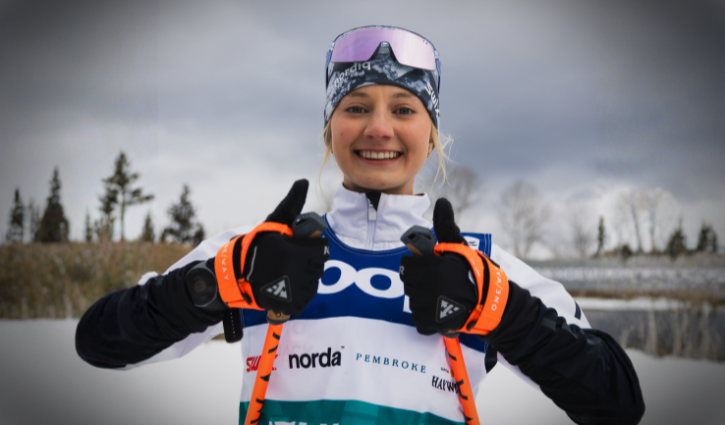
Before her first birthday, Sonjaa Schmidt’s father had already clipped her into a pair of skis. What began as a family pastime growing up in the Yukon evolved into a passion for cross-country skiing, then a goal of competing at the highest level.
Twenty years later, the SAIT Electrical Engineering Technology graduate made history as the first Canadian woman to win gold at the 2024 U23 FIS Nordic World Ski Championships. Her victory added another chapter to the Yukon’s legacy as a cross-country ski powerhouse.
Then, just one year later, Schmidt took that momentum to an even bigger stage by earning a spot on Canada’s 2026 Olympic team.
“Growing up in the Yukon, there were so many big names around, like Dahria Beatty, Emily Nishikawa, Alain Masson and Lucy Steele-Masson,” Schmidt says. “They all went to the Olympics for cross-country skiing. It made me believe that if they can do it, I could too.”
Schmidt sat down with LINK writer Lisa Tanh to share what shaped her drive to pursue her ambitions, the mindset that carried her through the stretches before her breakthroughs, and what it was like training for and making her Olympic debut.
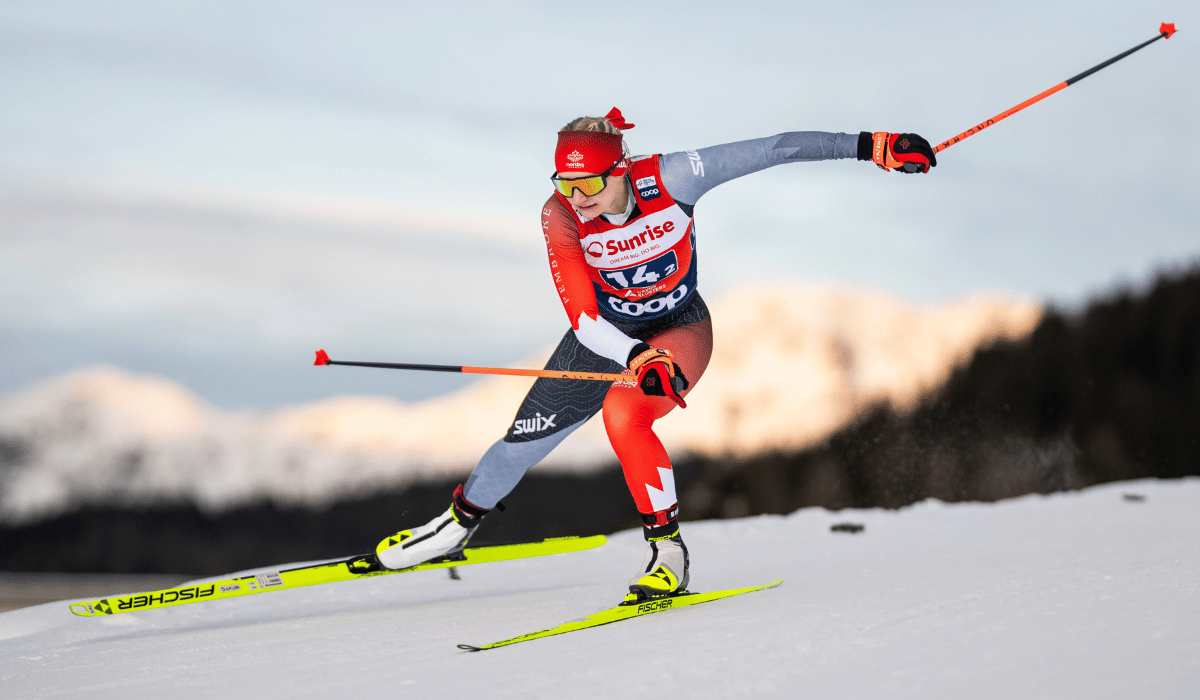
Sonjaa Schmidt competes in the women's free technique team sprint prologue during the FIS Cross-Country World Cup on December 13, 2024 in Davos.
Can you walk me through a moment that became a turning point in your rise in cross-country skiing?
Before my U23 world champion win in 2024, I struggled a lot in the previous year's season. I had long COVID, I lost my spot on the national development team, and I had to ask myself whether I wanted to keep skiing. I ended up losing my funding, too, so I needed to support myself if I wanted to continue.
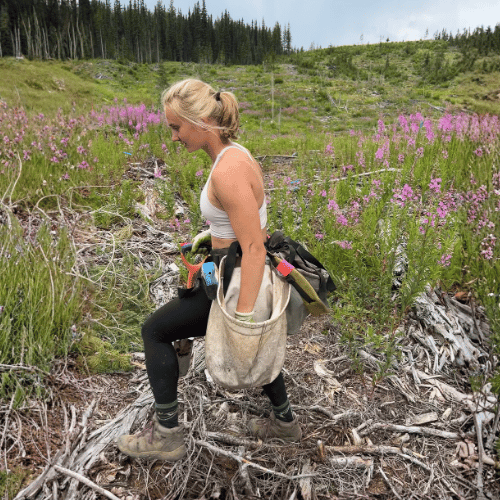
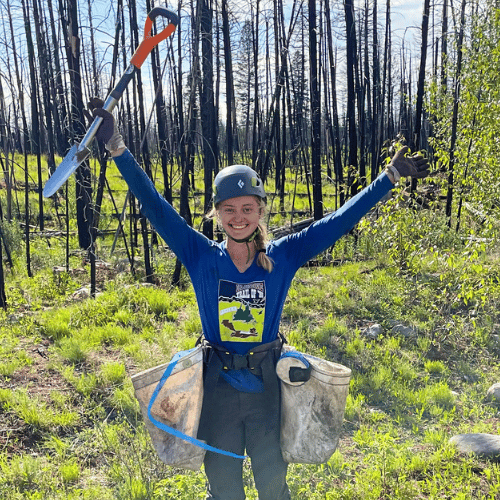
That's when I started tree planting and secured a scholarship for running at SAIT. I used it to fund my skiing. In that season, I was U23 world champion, and from there, I made my first world cup. After that it was like, “Wow, this is my reality. I'm racing on the world stage.”
What helped solidify your belief in what was possible?
I had been dreaming about winning a U23 world champion title. Nobody ever knew I had that in my mind because, in Canada, nobody had done that before. But that dream was always there.
The year I won, during summer training leading up to it, I started to think that it was possible. My coach always had something positive to say. He really shaped me as an athlete. Going into that season, the world opened up to me and I started thinking, “Why not me?”
What do you hope your victories represent for the next generation of skiers?
I was training really hard. I qualified in 29th position and only the top 30 make it through to heats, which are the elimination rounds. Usually, if you qualify toward the back, people assume you probably won’t win. But I won my first and second heats, and I found myself lining up for the final.
I didn’t rule myself out of that opportunity, so I hope to inspire all those kids out there who are racing. And I really hope that people can look at that and think, “If Sonjaa did that, maybe I can do it.”
What was a ‘day in the life’ like for you as you prepared for your Olympic debut?
In the fall, I lived in Canmore. Then I went to Europe in January 2026. A month of training leading up to the Olympics was probably 50 to 60 hours. Before, we try to put in a lot of hours to get fitter, then once we're getting closer to the competitions, we tone it down and try to recover from those hours so we have energy to race and can go really fast.
How are you feeling about the experience of your debut? And who inspires your grit, determination and resilience?
Looking back, I was a little disappointed with my races, but I’m grateful to have had the experience. I worked so hard to get there.
Someone who's always been inspiring is Jessie Diggins. She doesn’t fall into that category where you're good at skiing from a young age, and everything is just sunshine and rainbows. She has a gruelling story. She's so motivating and someone I really look up to.
What are you able to share about what’s coming up for you?
In March, I was at the Nordic Canada Ski Nationals, where I won all four of my races. Then I competed at the World Cup Finals in Lake Placid. My best place was 18th in the skate sprint. Then I was 43rd in the classic 10k individual, and 37th in the 20k mass start.
Now, I'm heading straight to tree planting. I'll probably spend a couple of months tree planting because I love the mental break it gives me from skiing. It's still very physical, but I love being in the woods.
Like what you are reading?
Find more stories from past, present and upcoming issues of LINK magazine!
Oki, Âba wathtech, Danit'ada, Tawnshi, Hello.
SAIT is located on the traditional territories of the Niitsitapi (Blackfoot) and the people of Treaty 7 which includes the Siksika, the Piikani, the Kainai, the Tsuut’ina and the Îyârhe Nakoda of Bearspaw, Chiniki and Goodstoney.
We are situated in an area the Blackfoot tribes traditionally called Moh’kinsstis, where the Bow River meets the Elbow River. We now call it the city of Calgary, which is also home to the Métis Nation of Alberta.